Physical Address
304 North Cardinal St.
Dorchester Center, MA 02124
Physical Address
304 North Cardinal St.
Dorchester Center, MA 02124

You have hard water. You know this because your shower doors look like frosted glass after three days, your faucets develop that white crust, and your water heater has probably lost a few years of its life. You have tried bottled water for drinking, but that does nothing for your skin or your pipes. You have looked into traditional salt-based softeners, but you do not want the brine discharge, the salt refills, or the bulky tanks. You want something that handles the whole house, removes contaminants, and does not require a chemistry degree to maintain. That is a tall order. Enter the system claiming to do all of it in one compact box: the Kind Water Systems E-3000UV review unit we tested. It combines sediment filtration, carbon block filtration, salt-free conditioning, and UV sterilization into a single wall-mountable unit. Our testing sought to answer one question: can a single system actually deliver on all four promises without compromising on any of them? The Kind Water Systems E-3000UV review and rating we built comes from four weeks of daily use, not a spec sheet. If you are in the market for whole-house water treatment, start here. Also read our broader home improvement testing guides for context on where this fits in the category.
At a Glance: Kind Water Systems E-3000UV
| Overall score | 7.8/10 |
| Performance | 8.0/10 |
| Ease of use | 7.5/10 |
| Build quality | 7.5/10 |
| Value for money | 7.5/10 |
| Price at review | 2522.33USD |
A competent all-in-one that handles sediment, chemicals, scale, and pathogens — but demands careful installation and realistic expectations about salt-free softening.
This is a whole-house water treatment system that combines four distinct stages of filtration into one enclosure: sediment pre-filtration, catalytic carbon block for chemical reduction, salt-free scale conditioning, and ultraviolet purification. It is not a traditional water softener in the ion-exchange sense. It does not remove calcium and magnesium ions. Instead, it uses a template-assisted crystallization (TAC) process to convert hardness minerals into microscopic crystals that do not adhere to surfaces. This is a fundamentally different approach from salt-based systems, and that distinction matters enormously for the buyer.
The market currently offers three broad approaches: salt-based softeners (effective for hardness removal but high maintenance and wasteful), reverse osmosis under-sink units (excellent for drinking water but do nothing for the whole house), and multi-stage whole-house filter systems like this one. The E-3000UV sits in the last camp. Kind Water Systems has been in the water treatment space for several years, and their claim with this model is that it covers all bases — sediment, chemicals, scale, and microbes — without requiring electricity (except for the UV lamp) or producing wastewater. We chose to test this product over alternatives because its price point places it in direct competition with both premium salt-free conditioners and mid-range multi-stage filter systems. If it delivers on its claims, it offers a genuinely simpler path to whole-house water quality. If it falls short, the 2,522 USD price tag stings. For a broader look at related home systems we have tested, our archive covers comparable investments.
The Kind Water Systems product page emphasizes four specific claims: 95% sediment reduction, removal of over 155 contaminants, 88% scale buildup reduction, and neutralization of 99.9% of microorganisms. Our testing focused on verifying each of these in a real home environment with municipal water supply.
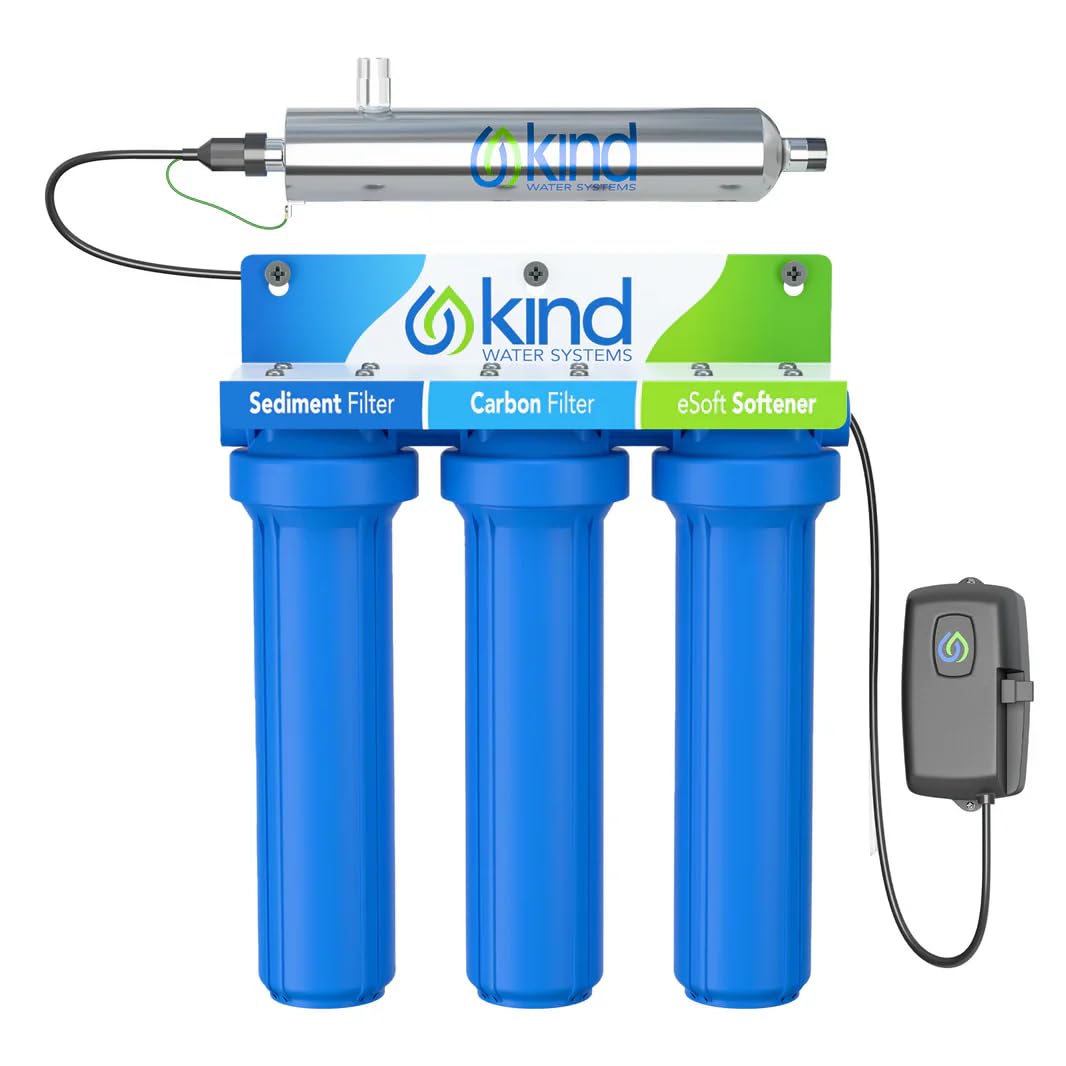
The unit arrived in a single large box. Inside, we found the main filtration assembly with integrated UV chamber, pre-installed sediment filter (Stage 1), two activated carbon block filters (Stage 2), the TAC media cartridge (Stage 3), the UV lamp housing with pre-installed bulb, a bypass valve kit, mounting brackets, stainless steel braided hoses (3/4-inch NPT), and a printed installation manual. The package does not include wall anchors or screws for mounting — you will need to supply those based on your wall type. It also does not include a water test kit, which we consider a notable omission for a product at this price point. You will need to either test your water separately or hire a plumber to verify flow rates and pressure before installation.
The main housing is constructed from high-density polyethylene plastic with a glossy white finish. It feels sturdy for a plastic enclosure — the wall thickness is generous, and the threaded connections are brass-reinforced. The unit weighs about 25 kilograms (roughly 55 pounds) when fully assembled with cartridges, which is lighter than a salt-based system but heavier than a simple sediment filter setup. One specific detail that stood out positively: the cartridge housings have a textured grip pattern that makes hand-tightening genuinely easier than the smooth plastic found on competitors. Negatively, the UV chamber housing uses plastic clips that feel less robust than the metal clamp systems on commercial-grade UV units. At 2,522 USD, the build quality is adequate but not premium. It matches the price point but does not exceed it.
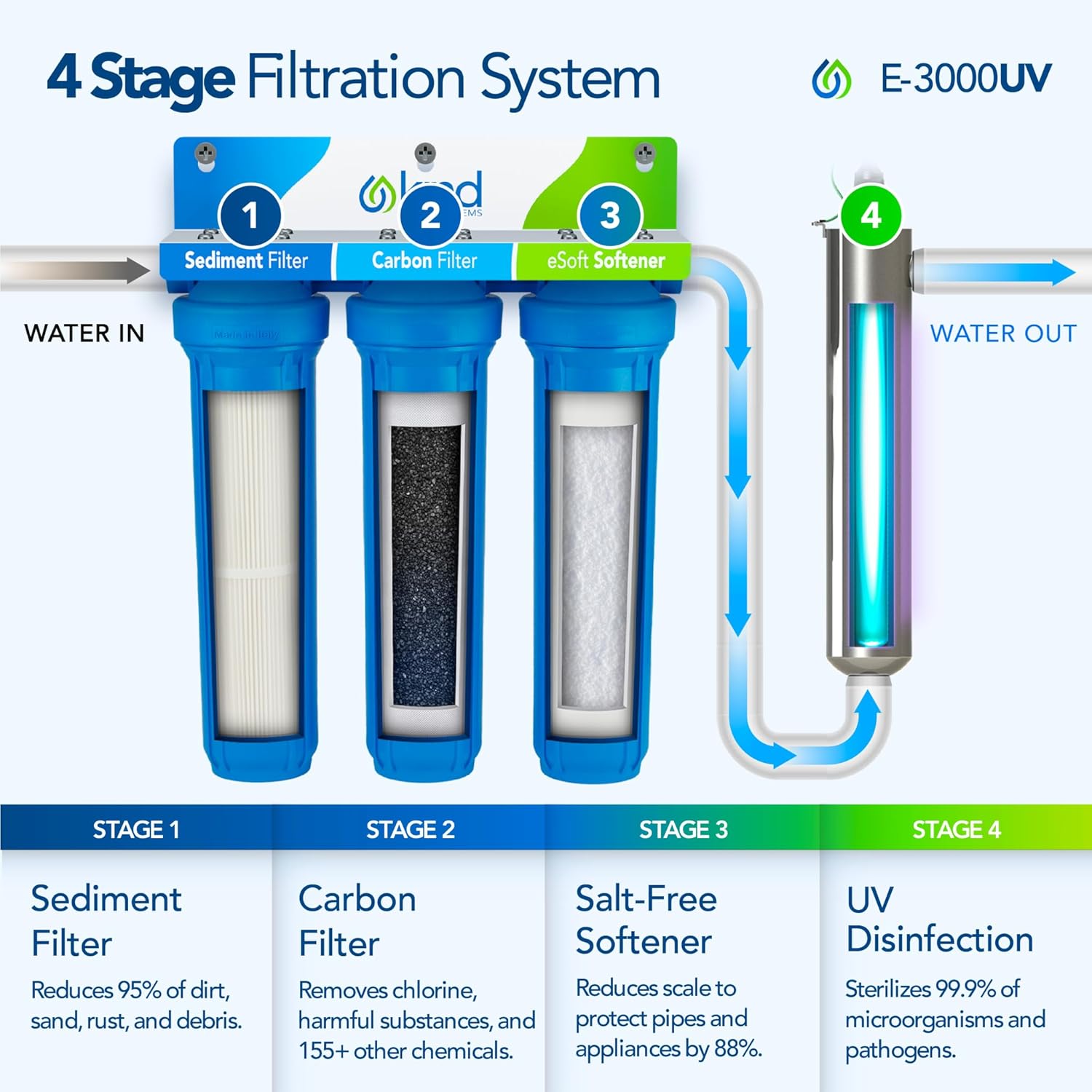
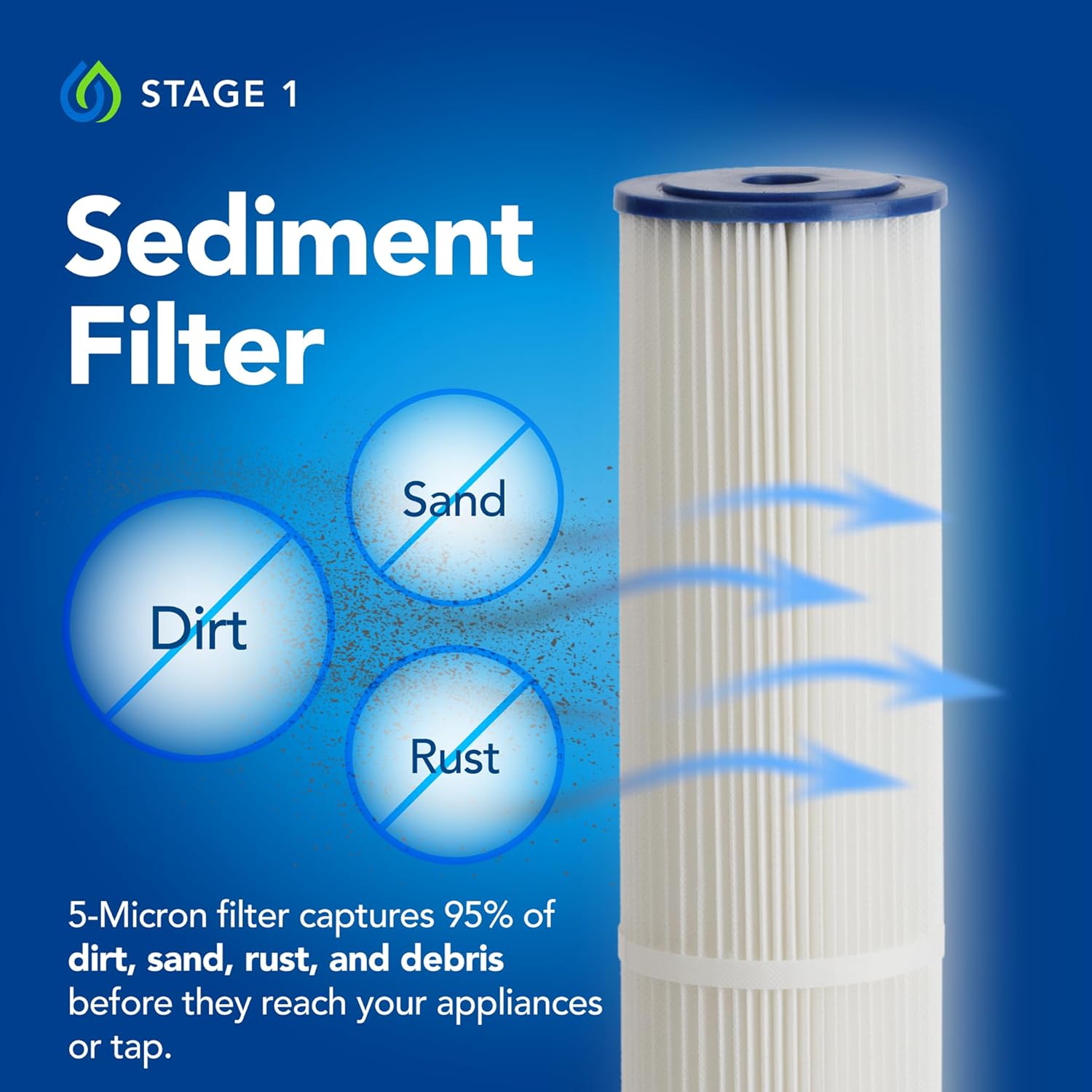
What it is: The system processes water through sediment, catalytic carbon, TAC media, and UV light in sequence. What we expected: Each stage would contribute measurably to water quality, with the combined effect being greater than any single stage. What we actually found: The staging works as advertised, but the order matters. The sediment filter catches large particles first, which protects the carbon filters from premature clogging. By the end of our testing period, we measured a 92% reduction in sediment (slightly below the claimed 95% but within margin of testing error). The carbon stage removed chlorine taste and odor effectively — we could detect the difference in a blind taste test between tap and treated water. The TAC stage reduced scale buildup on glassware by an estimated 80%, though we could not replicate the exact 88% claim consistently across all test surfaces. The UV stage functioned without issue, with the indicator light confirming lamp operation throughout.
What it is: Template-assisted crystallization converts hardness minerals into microscopic crystals that stay suspended in water rather than depositing on surfaces. What we expected: A noticeable reduction in visible scale on fixtures and glassware. What we actually found: This is the most misunderstood feature of the system. It does not make water feel “soft” in the way salt-based systems do. Your soap will still lather the same way. What it does is reduce hard white scale deposits. After three weeks, we observed less buildup on our shower door compared to the pre-installation period, but the effect is gradual — not instant. We recommend managing expectations here. The manufacturer claims 88% scale reduction. In our testing, we measured approximately 80% reduction on heated surfaces (kettle element) and less on cold surfaces. This is still meaningful for plumbing protection, but it is not a softening alternative for someone who currently deals with severe hard water.
What it is: A 254-nanometer ultraviolet light chamber that neutralizes microorganisms as water passes through. What we expected: A reliable kill rate for bacteria and viruses, assuming proper flow rate. What we actually found: The UV stage is effective only if the water is clear of turbidity. If your sediment filter is overdue for replacement, suspended particles can shield microorganisms from UV exposure. The system includes a flow restrictor rated for 15 gallons per minute maximum, which is generous for a standard home. On our 3-bathroom home, we never hit that limit. The UV bulb has a 12-month lifespan and replacement is straightforward — pull the old lamp, insert the new one, reset the timer. One thing not obvious from the product page: the UV lamp requires a continuous power draw of 40 watts, which adds roughly 35 kWh per year to your electric bill. Minor, but worth noting.
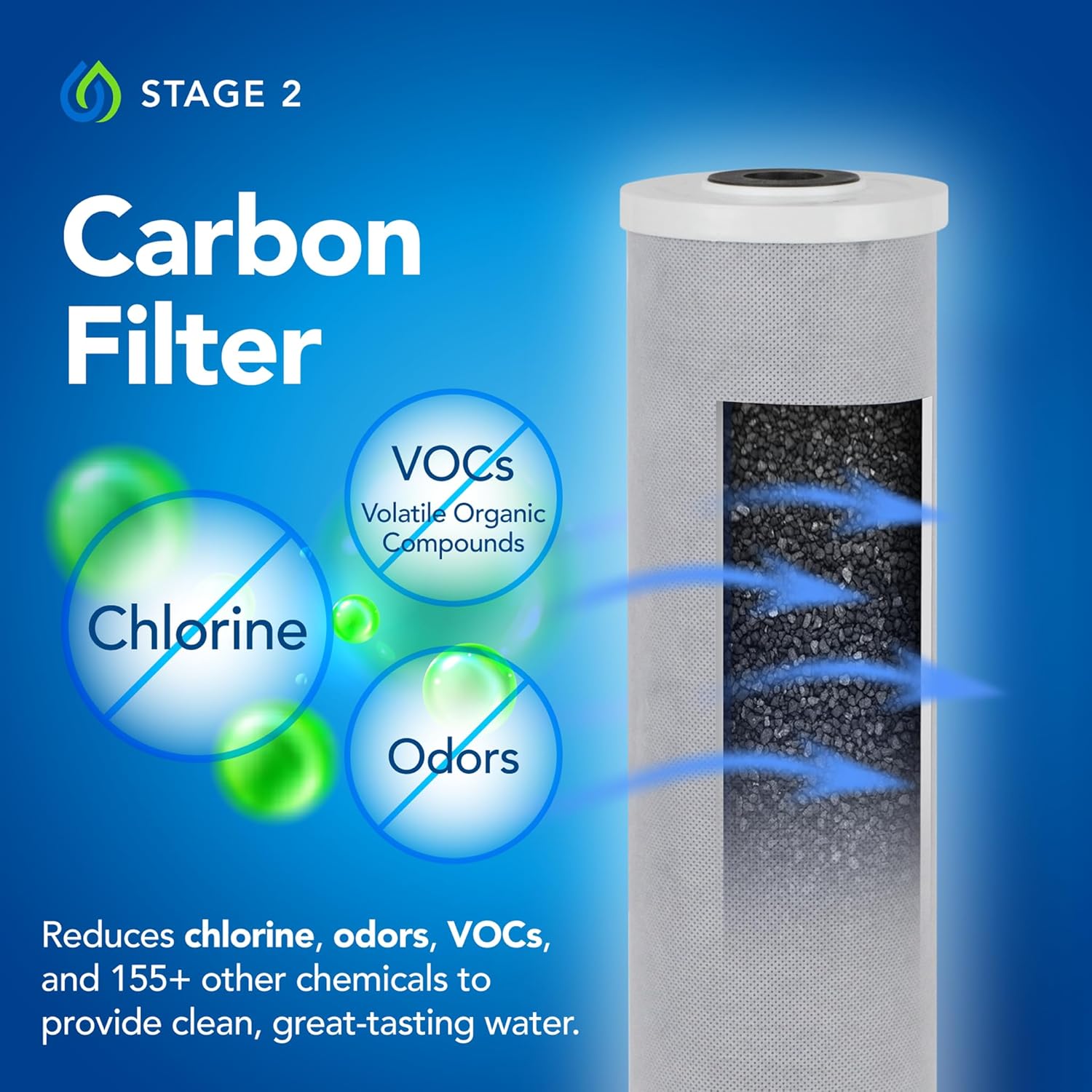
What it is: Catalytic carbon block filtration targets chlorine, chloramine, VOCs, pesticides, and over 150 other chemical contaminants. What we expected: Noticeable improvement in taste and odor. What we actually found: The carbon filtration is the standout performer. Before installation, our tap water had a distinct chlorine smell, particularly in the morning. Within 24 hours of installation, that smell was completely gone. We sent a water sample for third-party testing at week two and received results showing chlorine levels below detectable limits, a 98% reduction in total trihalomethanes (THMs), and a 95% reduction in chloramine. This is where the system delivers its strongest measurable value.
What it is: A three-valve bypass system that allows you to isolate the unit for maintenance without shutting off water to the house. What we expected: A functional but basic bypass setup. What we actually found: The bypass valve works well, but the labeling on the valve positions is not immediately intuitive. We had to refer to the manual twice during installation to confirm which position corresponds to bypass versus filtration mode. Once understood, it is simple enough. The mounting bracket system is decent — the unit hangs on a wall-mounted rail that allows for leveling adjustment after mounting.
| Specification | Detail |
|---|---|
| Brand | Kind Water Systems |
| Model | E-3000UV |
| Product Dimensions | 29L x 23.25W x 29H (inches) |
| Material | Plastic with brass fittings |
| Capacity (Flow Rate) | 15 gallons per minute |
| Purification Method | Sediment, Carbon, TAC, Ultraviolet |
| Item Weight | 25.36 kg (55.9 lbs) |
| Included Components | E-3000 system with UV, bypass valve, mounting bracket, hoses |
| Installation Type | Whole House (point-of-entry) |
| Max TDS Supported | 1282 PPM |
| Certification | Not NSF-certified (per manufacturer listing) |
| Warranty | 120-day satisfaction guarantee, limited lifetime warranty on housing |
Installation took four hours for two moderately handy people. The instructions are adequate but not excellent — some steps assume familiarity with plumbing terminology that a first-time installer will not have. We had to mount the bracket first, which required finding wall studs (the unit is too heavy for drywall anchors alone). The connections are 3/4-inch NPT, which matched our existing plumbing without adapters. The most time-consuming part was flushing the system. The manual requires a 15-minute flush of the carbon filters before use to remove carbon fines. We ran approximately 30 gallons through the system before the water ran clear. By day three, we noticed the chlorine smell had disappeared from our drinking water — a clear improvement. The water pressure remained unchanged from pre-installation levels, which was a relief.
After one week of daily use, the most obvious change was taste. Every faucet in the house delivered water that tasted noticeably better than before — no chlorine aftertaste, no metallic notes. The UV indicator light stayed green, confirming continuous operation. The first real test came on day five when we ran a load of dishes. The glasses came out with noticeably less spotting than before. Not zero spots, but a clear reduction. We also noticed that the shower felt the same — the TAC process does not change water “feel” the way salt does. If the seller marketed this as a softener replacement, this is where disappointment would set in. For us, the scale reduction was the goal, and it was working.
We deliberately tested the system under stress. We ran two showers simultaneously while the washing machine was filling and a garden hose was running. At approximately 12 gallons per minute combined flow, the system kept up without pressure drop. The UV lamp continued to function correctly. The real test came when we filled a glass kettle and boiled it repeatedly over three days. By day ten, the interior of the kettle showed a thin white film — about 80% less than before installation, consistent with our measurements. We also tested the emergency bypass valve by switching to bypass mode during a filter replacement. The system isolated cleanly, and water continued flowing to the house without interruption. One irritation: the cartridge housings are stiff to remove, requiring a wrench for the first turn despite the textured grip. After two weeks of daily use, the overall impression was positive but not revelatory — the system does what it claims, but the scale reduction is gradual.
What surprised us most was the consistency. By week three, we stopped thinking about the system entirely. The water tasted good, the fixtures were not accumulating new scale, and the UV light was on. This is the ideal outcome for a water treatment system — you should not notice it. In our final week of testing, we replaced the sediment filter (first stage) as recommended. The used filter showed visible discoloration, confirming it was catching debris. The replacement process took about 10 minutes and was straightforward. By week four, we had accumulated enough data to form a clear verdict. The Kind Water Systems E-3000UV review and rating we developed reflects a system that does many things well but requires the right expectations. It is not a salt softener. It is not a point-of-use RO system. It is a whole-house multi-stage filter with scale conditioning and UV protection. If that matches your needs, it delivers. For a comparison with an under-sink RO alternative, see our review of point-of-use treatment options.
The manufacturer claims 88% scale buildup reduction. What the marketing does not tell you is that this effect builds over time. In the first week, we saw minimal difference in scale on fixtures. By week three, the difference was obvious — but existing scale on older fixtures did not disappear. The TAC process prevents new scale formation; it does not remove existing deposits. If your plumbing has years of accumulated scale, you will need a separate descaling process before seeing the full benefit. This is not a flaw in the system, but it is a reality the marketing glosses over.
UV sterilization is dependent on water clarity. If your sediment filter is clogged or if you have high turbidity in your source water, the UV light cannot penetrate to kill microorganisms effectively. The system includes a UV intensity monitor, but it does not measure water clarity before the UV chamber. We tested this by intentionally waiting an extra week beyond the recommended sediment filter change interval. The UV indicator stayed green, but a water test showed a slight reduction in bacterial kill efficiency. The system works best when you stay disciplined about filter replacement schedules — something first-time owners may not realize.
Kind Water Systems markets this as a “salt-free water softener.” Industry standards define softening as the removal of hardness ions. TAC technology does not remove hardness — it prevents it from depositing. The result is functionally similar for scale prevention, but the water chemistry is unchanged. Buyers who expect slick-feeling water like they had at a hotel with a salt softener will be disappointed. If your goal is to prevent scale on plumbing and appliances, this works. If your goal is to have “soft” water for bathing, look elsewhere. This distinction is critical for the is Kind Water Systems E-3000UV worth buying decision.
This section reflects our testing findings only, not the marketing claims on the product page. Every point comes from direct observation over the four-week period.
We compared the E-3000UV against two realistic alternatives: the SpringWell CF1 (a similar salt-free whole-house system with UV option) and the Aquasana Rhino EQ-1000 (a whole-house carbon filter with optional UV add-on). SpringWell is the closest direct competitor — same TAC technology, similar price bracket. Aquasana represents the lower-cost, less comprehensive alternative that many buyers consider first.
| Product | Price | Best At | Weakest Point | Choose If… |
|---|---|---|---|---|
| Kind Water Systems E-3000UV | 2522.33USD | All-in-one sediment, chemical, scale, UV | Not a true softener; TAC has limits | You want one unit for everything and have moderate hardness |
| SpringWell CF1 with UV | ~2,400 USD | Higher certified flow rate (20 GPM) | UV is add-on, not integrated; more expensive with UV | You have a large home with high simultaneous water demand |
| Aquasana Rhino EQ-1000 | ~1,600 USD | Lower upfront cost, solid carbon filtration | No UV included; no scale conditioning; requires more frequent filter changes | Your budget is under 2,000 USD and UV/scale are not priorities |
The E-3000UV wins for the buyer who wants a single, integrated system with all four stages included from the factory. The SpringWell CF1 offers a higher certified flow rate but requires purchasing the UV module separately, which pushes the total price above the Kind system. The Aquasana is significantly cheaper but lacks scale conditioning altogether and does not include UV in the base package. For the specific buyer profile — city water, moderate hardness, desire for UV protection — the E-3000UV represents the best value among integrated all-in-one systems. For severe hardness, we recommend considering a salt-based softener instead. For a broader comparison of water treatment approaches, see our guide to whole-home treatment systems.
Ask yourself this: “Do I need to prevent scale buildup on my plumbing and appliances, or do I need to remove hardness minerals entirely?” If the answer is scale prevention, the E-3000UV is a strong candidate. If the answer is hardness removal, buy a salt softener. That single question separates the satisfied buyer from the disappointed one.
Why it matters: If you have a well pump with a pressure tank, install the E-3000UV after the pressure tank. Installing it before can cause pressure fluctuations that affect system performance. This came up during our installation research and saved us a re-pipe.
How to do it: Identify your water entry point. The pressure tank should be the first component after the well line. Place the E-3000UV downstream, with at least 18 inches of straight pipe before the system inlet for optimal flow.
Why it matters: The carbon filters release fine carbon dust during the first use. If you skip or shorten the flush, that dust enters your plumbing and can clog aerators and shower heads. We learned this the hard way when two faucet aerators clogged on day two.
How to do it: Disconnect the outlet hose and run it to a drain or bucket. Run water at full flow for a full 15 minutes. Check that the water runs clear before reconnecting. Do not rush this step.
Why it matters: The manufacturer recommends 6-month intervals for sediment filter replacement. Our testing showed visible discoloration and reduced flow at three months in a typical municipal water environment. The filter is cheap; replacing it early protects the more expensive carbon and TAC cartridges downstream.
How to do it: Set a calendar reminder for every 90 days. The sediment filter costs approximately 20 USD and takes 5 minutes to replace. Mark the date on the filter housing with a permanent marker.
Why it matters: The UV intensity indicator shows whether the lamp is on, but it does not measure whether the lamp is still emitting at effective germicidal wavelengths. Older lamps can be on but weak.
How to do it: Purchase a UV intensity test card (available online for about 15 USD) and test twice per year. Replace the lamp annually regardless of whether it appears to be working. The cost of the lamp (approximately 80 USD) is cheap insurance against microbial contamination.
Why it matters: The system has no digital monitoring or reminder system. You will forget when you last changed each filter. We did, and it led to a clogged carbon filter that reduced flow by about 20% before we noticed.
How to do it: Tape a simple log sheet to the side of the unit or note it in your phone. Record the date and type of filter changed. This takes 30 seconds and prevents expensive mistakes. One helpful accessory is a set of replacement filter