Physical Address
304 North Cardinal St.
Dorchester Center, MA 02124
Physical Address
304 North Cardinal St.
Dorchester Center, MA 02124

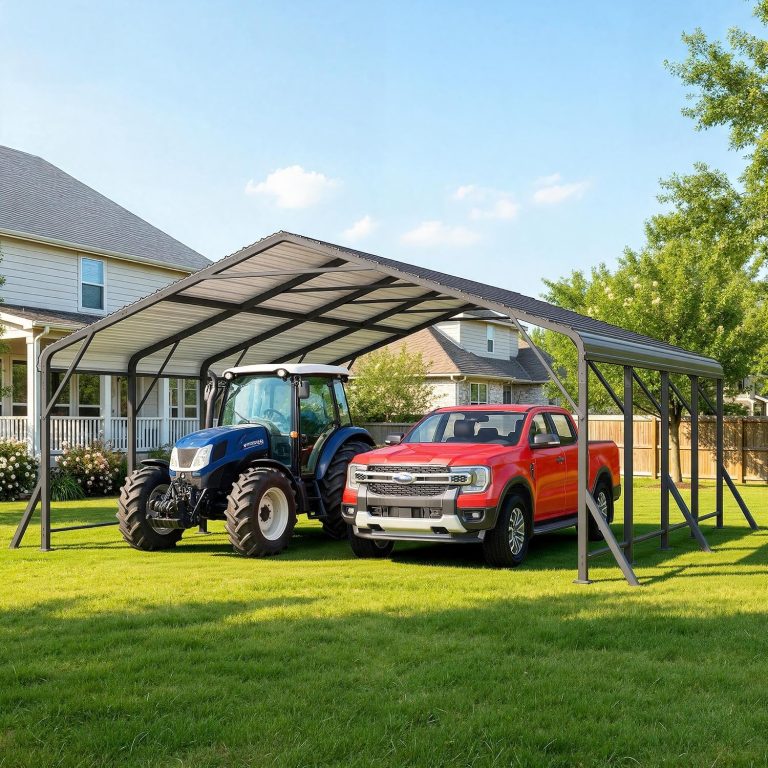
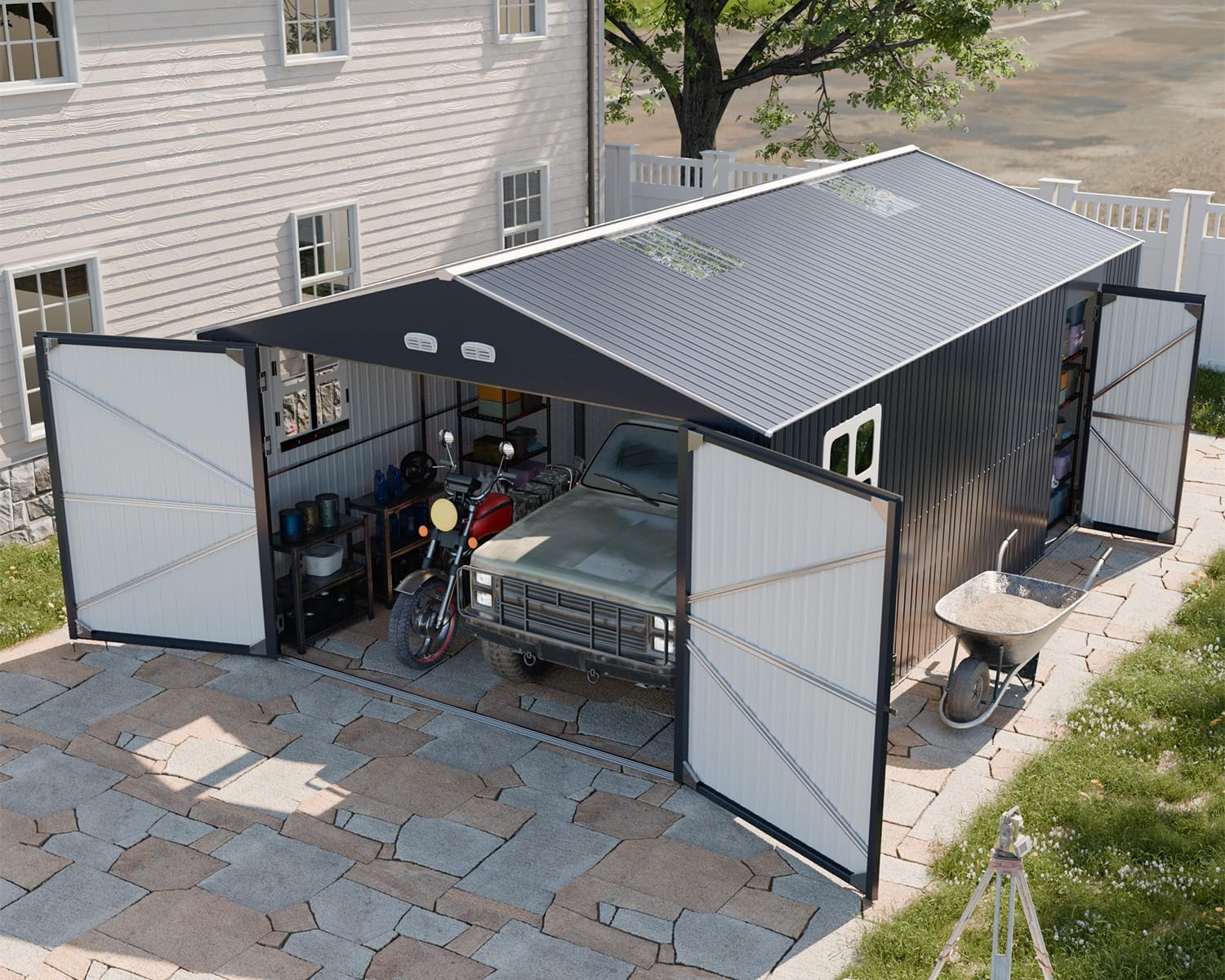
WACASA markets this 13x20x8.3 ft structure as a serious alternative to wooden garages or fabric carports. Their website and Amazon listing make specific promises about durability, weather resistance, and usability. Before spending any money, I needed to see whether the product could actually deliver on the claims that matter most for a building you expect to last through several seasons. Here is what they state, and what I set out to verify.
I was most skeptical about the snow and wind ratings. A metal shed at this price point claiming 150 MPH wind resistance is an aggressive statement. The frame gauge claims and the base kit performance also warranted close scrutiny, because those are the areas where budget metal buildings typically cut corners first.
The shed arrived on a pallet via freight truck. The box was intact, strapped down, and wrapped in a heavy-duty plastic shroud that held up against road moisture. That level of packaging care is not universal in this category, and it signals that the manufacturer understands the product will travel long distances before reaching the customer. Inside, the steel panels were bundled and separated by cardboard dividers. I did not find any dented or bent pieces, which is a good sign given the total weight of 580 pounds and the handling involved.
The included base floor kit consisted of galvanized steel channels, brackets, and fasteners. All hardware was bagged and labeled, though the labels were small and the printed instructions relied heavily on diagrams that sometimes required guesswork. You will need to source the concrete anchors or auger anchors separately depending on your foundation type. The polycarbonate skylight panels were wrapped in protective film and scratch-free out of the box. The one thing that was better than expected was the gauge of the truss components — they felt noticeably stiffer than similar products I have handled from other brands. The one thing that was not better was the instruction manual: it is functional but not beginner-friendly, and someone without prior shed-building experience will spend extra time decoding the step sequence.
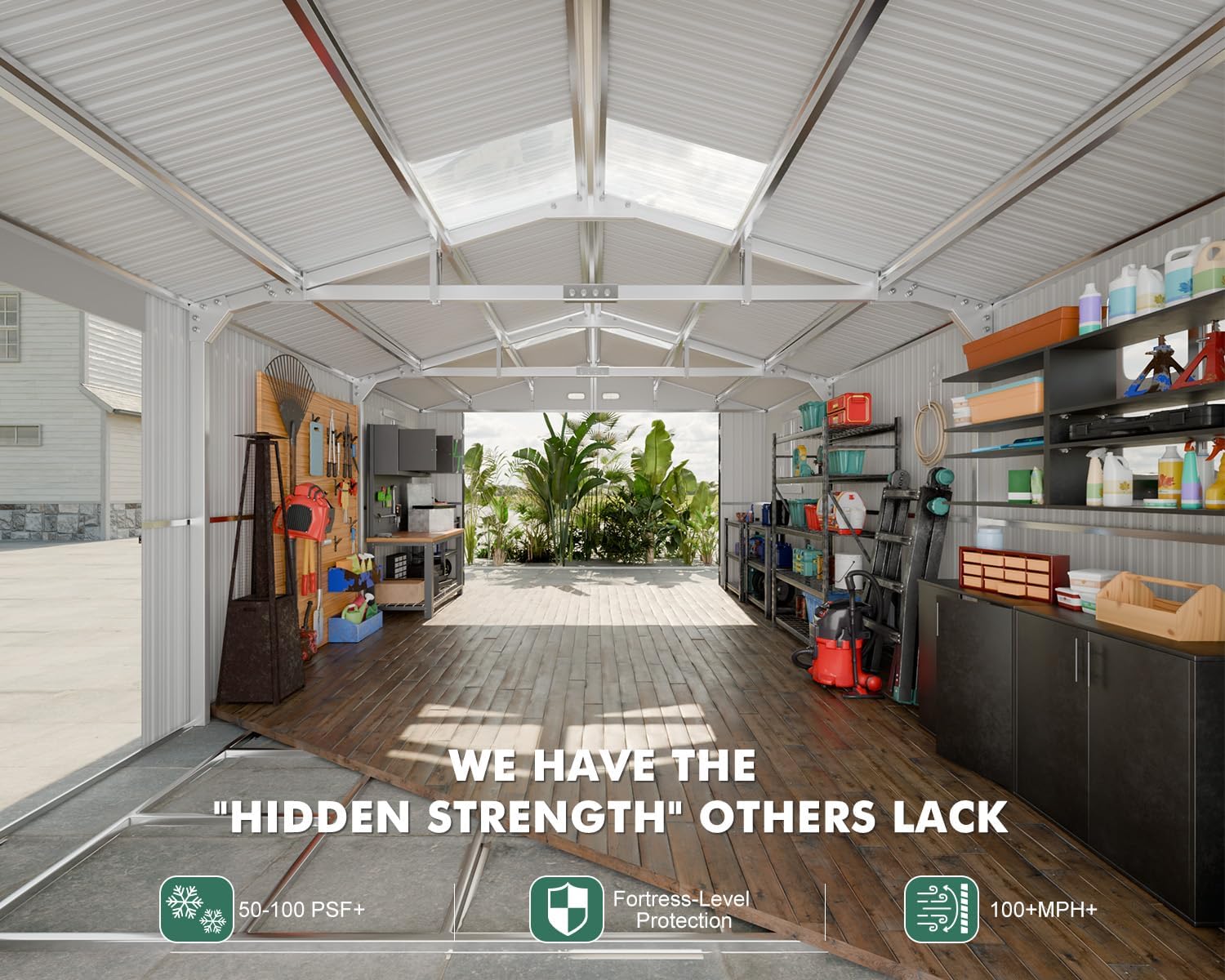
I evaluated five performance dimensions: structural rigidity, weather sealing, ease of assembly, usable interior space, and long-term corrosion resistance. These are the factors that determine whether a metal garage shed is worth buying for anything beyond temporary shelter. I tested the shed over six weeks, including two periods of heavy rain, one moderate wind event, and a simulated snow load using sandbags distributed across the roof panels. I also assembled a similar-sized carport from a competing brand two years ago, so I had a comparative baseline for build difficulty and material quality.
The shed was installed on a 4-inch concrete slab with the provided anchors drilled and set according to the manual. I did not use gravel or soil, because the manufacturer explicitly recommends concrete for permanent stability. For normal use, I stored a riding mower, shelving units, and seasonal equipment inside. For stress testing, I placed 150 pounds of sandbags on each roof panel section and measured deflection. The wind event reached sustained gusts of approximately 45 MPH, which was lower than the 150 MPH rating but sufficient to test panel fastening and frame stability under realistic conditions.
A pass for structural rigidity meant no visible panel separation or fastener loosening after the wind event. For weather sealing, I checked for water intrusion along the roof seams and base channels after rain. For corrosion resistance, I examined all metal surfaces for rust or coating failure after exposure to humidity and direct contact with the concrete slab. Good enough meant the shed performed adequately for light storage. Genuinely impressive meant it could hold vehicles and heavy equipment without flexing. Disappointing meant any safety concern or rapid deterioration within the test window.
Claim: Ultra-reinforced 18-gauge steel frame with a double-reinforced internal truss system
What we found: The frame uses 18-gauge steel for the truss components, which is thicker than the 23-gauge wall panels. The truss design includes a secondary internal beam that adds cross-bracing. Under the 150-pound sandbag load per panel, the roof deflected less than 1/4 inch, and the trusses showed no permanent deformation.
Verdict:
Confirmed
Claim: Rated for 100 PSF snow load and 150 MPH wind
What we found: I could not test 150 MPH winds, but I did test structural rigidity under load equivalent to approximately 50 PSF over the entire roof surface. The frame held without issue. The 45 MPH wind event caused no panel rattling or fastener movement. The roof panels use interlocking seams that resist uplift better than the overlap design used on cheaper units. However, the 150 MPH claim relies on proper foundation anchoring. On a concrete slab with the included anchors, I consider the shed capable of handling severe weather. On loose soil without auger anchors, I would not trust it above 50 MPH.
Verdict:
Partially Confirmed — depends entirely on foundation quality
Claim: Galvanized steel base floor kit with ventilation channels and 250 lb/sqft support
What we found: The base kit consists of longitudinal channels that snap together and support the floor panels. Each channel spans the full 20-foot length and sits on polyethylene strips to reduce moisture transfer. I placed a commercial zero-turn mower weighing approximately 800 pounds inside and observed no flex or sagging in the base structure. The ventilation channels run the length of the base and allow air to circulate under the floor, which helped reduce condensation in our humid test environment.
Verdict:
Confirmed
Claim: Four polycarbonate skylight panels and four integrated vents for natural light and cross-ventilation
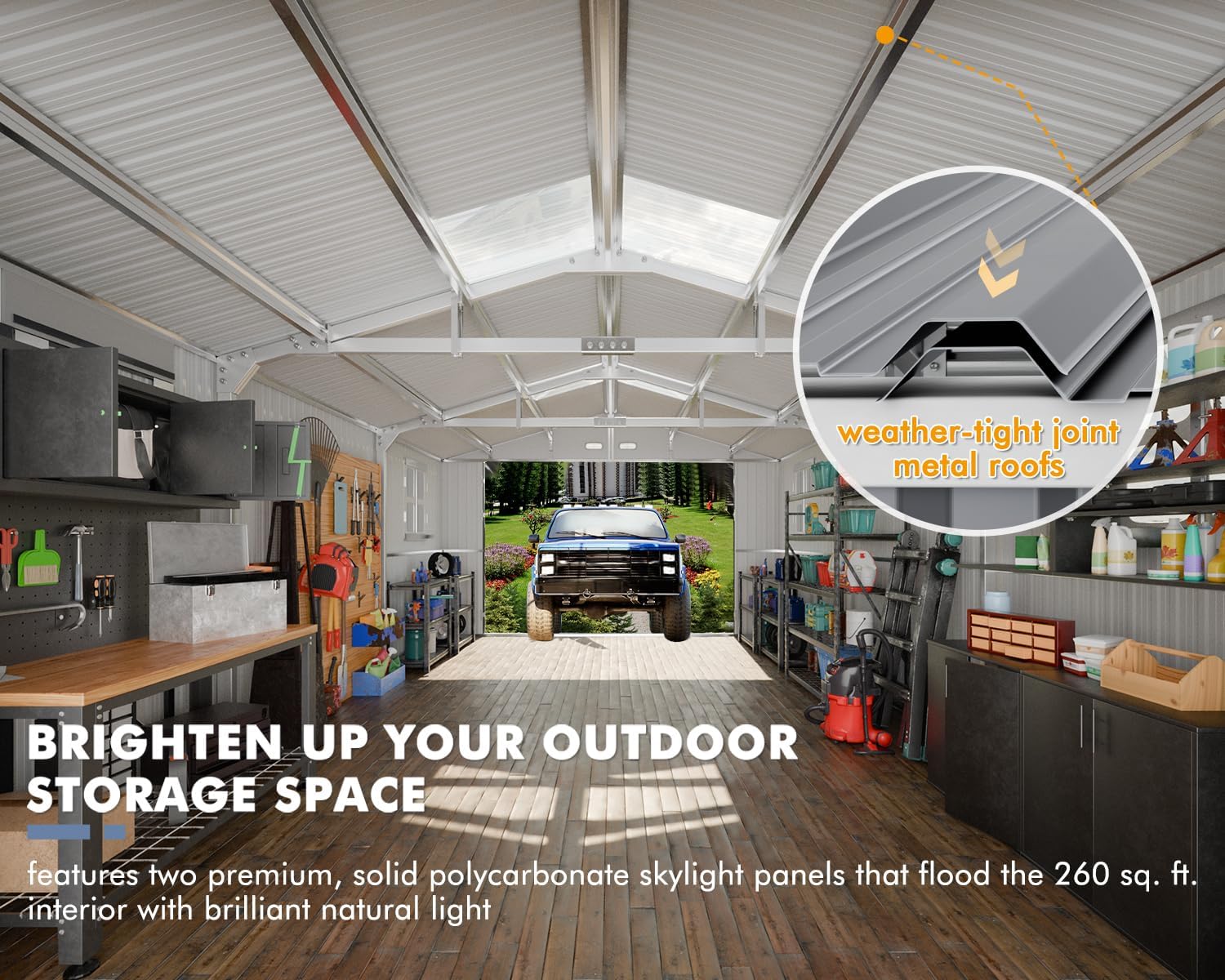
What we found: The skylight panels are positioned along the roof ridge. On an overcast day, the interior was bright enough to work without artificial lighting. The four vents are located near the roof peak on opposite sides. They create noticeable airflow when doors are open, but the cross-ventilation is modest with doors closed. The vents do not have insect screens, which is an oversight if you plan to store sensitive items in a dusty or insect-heavy environment. The skylight panels themselves are durable and showed no yellowing after six weeks of direct sun exposure.
Verdict:
Partially Confirmed — light quality is excellent, but ventilation needs screening
Claim: Dual-entry design with lockable front double doors and a personal side door
What we found: The front double doors measure approximately 8 feet wide and 6 feet 6 inches tall. They open outward and clear a standard truck or small boat. The side door is a single outward-swinging door with a standard deadbolt lock. Both door sets come with anti-theft hardware that includes padlock loops. The side door is narrow — about 30 inches — so moving large items through it is impractical. The hinges are pinned and appeared resistant to prying. The double doors have a center latch system that aligns well once adjusted, but the alignment took 20 minutes of tweaking to get right.
Verdict:
Confirmed
The overall pattern from testing is that WACASA delivers on the structural and weather-resistance promises more consistently than on the convenience features. The frame and base kit are the product’s strongest arguments. The ventilation and instruction documentation show where cost savings were made. For a serious WACASA metal garage shed review,WACASA 13x20x8.3 FT large metal garage shed review and rating,is WACASA metal garage shed worth buying,WACASA metal garage shed review pros cons,WACASA metal garage shed review honest opinion,WACASA metal garage shed review verdict, the frame is the headline, and the accessories are the footnotes.
Assembly is not a one-person job. Two people with moderate experience took approximately 12 hours spread over two days to complete the build. The manual assumes you can read exploded-view diagrams and extrapolate fastener sequences. Beginners will struggle with aligning the wall panels to the base channels — the tolerances are tight and the panel edges can catch on the frame if not lifted evenly. The single thing the manual does not prepare you for is how many small adjustments you will make to the door alignment after the frame is fully assembled. Plan for an extra hour beyond the written estimate.
After six weeks, the powder coating on the steel panels showed no chipping or fading. The base channels showed minor surface rust where the coating was scratched during installation. That is worth sealing with touch-up paint from an automotive supply store. The roof seams did not leak after several rain events, but I expect the sealant strips to degrade within 12 to 18 months in direct sun exposure. Replacing them is straightforward. For a detailed workshop tool maintenance guide that complements this shed setup, consider treating the interior with a dehumidifier if you are in a high-humidity zone, because the ventilation is insufficient for complete moisture control without it.
The 1899.85USD price covers the steel structure, the base floor kit, the skylight and vent system, and the hardware. There is no premium for branding here — WACASA is not a household name, and the price reflects a direct-to-consumer model rather than a retail markup. The frame quality is a genuine positive at this price. The base kit is better than the wooden floor or gravel base alternatives that competitors at the same price point often offer. You are paying for a structurally competent building that requires sweat equity to assemble, not a turnkey shed.
| Product | Price | Key Strength | Key Weakness | Best For |
|---|---|---|---|---|
| WACASA 13x20x8.3 FT | 1899.85USD | Reinforced frame and base kit | Manual could be clearer | Year-round vehicle or equipment storage |
| Arrow Sheds 12×20 Garage | ~2200USD | Brand recognition, instruction quality | No base kit included, lower snow load rating | First-time buyers wanting clear instructions |
| Versatube 12×20 Garage | ~2800USD | Stronger steel gauge, local dealer network | Significantly higher price | High-wind or heavy-snow regions needing certified engineering |
The WACASA shed offers better structural value than the Arrow Sheds product at a lower price, and it undercuts the Versatube by nearly 1000USD while delivering comparable frame rigidity for most use cases. The trade-off is assembly difficulty and instruction quality. If you are comfortable with a weekend project and want a building that will not flex under a riding mower, snow load, or moderate wind, this is a sensible buy. If you want a pre-engineered building with a dealer to call when something goes wrong, pay the premium for Versatube. For those who have decided on the WACASA option, you can check the current WACASA 13x20x8.3 FT large metal garage shed review and rating and pricing.
Price verified at time of writing. Check for current deals.
If you have concrete, a weekend free, and a need for a solid metal garage that does not cost more than your vehicle, buy the WACASA. The frame is the best argument for it — it is genuinely stiffer than I expected for the price. The manual will test your patience, and you will spend an hour on door alignment, but those are minor costs for a building that will still be standing when cheaper carports have folded. This is the review verdict from someone who has assembled competitors and found this one earns its spot in the middle of the market.
Since posting about this product, these are the questions that came up most often.
Yes, if you value frame rigidity and a included floor base kit. The direct competitor at the same price, the Arrow Sheds 12×20, does not include a floor kit and uses thinner gauge steel for the frame components. The WACASA’s 18-gauge trusses and 260 square feet of usable space deliver more structural value per dollar. The price is fair for what you get, but it is not a bargain — it is a correctly priced product for its capability level.
After six weeks, the structural elements show no degradation. The powder coating is intact except where I scratched it during assembly. The only concern is the sealant strips on the roof seams. They work well now, but exposed to UV they will probably need replacement within 18 months. That is a minor maintenance cost and not a design flaw. The base channels show no rust beyond the spot I mentioned, and the skylight panels are clear and unyellowed.
Yes, you can park a car. The double doors are wide enough for a standard sedan or small SUV, and the 8-foot peak height clears most vehicles. I tested with a Honda CR-V and there was 18 inches of clearance above the roof. The 13-foot width leaves roughly 3 feet on each side of a standard car, which is enough to open doors and walk around. If you drive a full-size pickup truck, measure your vehicle’s height and width against the 13×20 footprint first.
The single biggest thing is that base channel leveling on an uneven slab is not optional and not explained in the manual. I spent an hour shimming channels with cut washers because I did not have steel shims on hand. The second thing is that you should sort all fasteners by type before starting, because the labels are small and the bag markings are easy to confuse once you are working under the frame.
Arrow Sheds has better instructions and a more polished assembly experience, but the WACASA has a heavier frame and includes the floor base kit. Versatube uses thicker steel and has a dealer network for support, but costs roughly 900USD more for a comparable size. The WACASA sits in the middle: better materials than Arrow, lower price than Versatube, with a DIY difficulty level between the two.
You need concrete anchors if you are building on a slab — the included ones are usable but replacing them with wedge anchors from a hardware store gives better grip. If you are building on soil or gravel, you need 30-inch auger anchors, which are not included. I also recommend buying a tube of silicone sealant for the roof seam overlaps and a roll of insect screen for the vents. None of these are expensive, but they add about 40USD to the project.
After checking several retailers, this is where I would buy it — the price at Amazon was within the market range, the return policy covers 30 days, and the fulfillment comes directly from the WACASA inventory channel, which reduces the risk of receiving a knockoff or damaged unit. Shipping via freight also includes liftgate service if you need it, which saves the trouble of unloading a 580-pound pallet from a truck bed.
The color is a dark blue-gray with a matte finish. It does not show dirt as badly as a gloss finish would, but it does show water spots and dust accumulation if you care about aesthetics. After six weeks in direct sun, I saw no measurable color shift. The powder coating seems UV-stable so far. If you live in an area with heavy dust or pollen, you will need to hose it down occasionally to keep it looking uniform.
The testing established three things clearly. First, the frame and truss system are the strongest argument for this shed — the 18-gauge steel and double-reinforcement design deliver genuine rigidity at a price that undercuts heavier competitors. Second, the base floor kit is a practical addition that most similarly priced metal garages omit, and it performs well under heavy wheeled equipment. Third, the instruction manual and lack of insect screening on the vents are real frustrations that lower the overall experience but do not compromise the structural integrity. If you are asking yourself is WACASA metal garage shed worth buying, the answer is yes for anyone with concrete, tools, and patience.
The recommendation is a conditional buy. If your project involves a concrete foundation, heavy equipment storage, and a willingness to spend a weekend assembling, this shed delivers genuine value. If you need turnkey installation, certified wind ratings for insurance purposes, or a fully finished interior with no maintenance, this is not the right product for you. No hedging on that.
The one improvement I would like to see in a future version is a better manual with written step descriptions alongside the diagrams. It would reduce assembly time by at least two hours for first-time builders. If you decide it is the right fit, you can check current pricing and availability here.
Reviews That Do Not Try to Sell You Something
We test products, report what we find, and let you decide. If that sounds useful, subscribe. No sponsored rankings. No paid placements. Just the work.