Physical Address
304 North Cardinal St.
Dorchester Center, MA 02124
Physical Address
304 North Cardinal St.
Dorchester Center, MA 02124

You have a yard full of equipment. A riding mower, a couple of bikes, a collection of garden tools that somehow multiplied. The garage is packed to the rafters, and the corner of the patio you sacrificed to the leaf blower and trimmer is an eyesore. You need a storage shed. But the idea of assembling a wooden structure that might rot, or a metal one that might rust and dent, has kept you searching. You have seen the plastic ones and wondered: is it a durable solution or just an expensive toy? Most reviews online gloss over the gritty details.
This Rubbermaid resin outdoor storage shed review exists to give you an honest account. We spent six weeks testing the 7 x 10.5-foot model in a coastal environment with consistent wind, rain, and sun exposure. This is not a marketing piece. It is a report on what worked, what did not, and whether the price tag makes sense for a practical homeowner.
Disclosure: This review contains affiliate links. Purchasing through them supports our work at no added cost to you. All testing was conducted independently.
Before getting into the specific testing results, it might help to understand the philosophy we apply to our project tool reviews—the same standards apply here to this large outdoor structure.
This is a free-standing, resin-based outdoor storage building. It sits in the mid-to-premium range of the consumer resin shed category, designed to house bulky items like riding mowers, bicycles, and patio furniture. The manufacturer is Rubbermaid, a brand with a long history in consumer storage. This particular model is engineered to solve a specific problem: storing large, heavy equipment in a structure that balances durability with light weight. The primary engineering difference here is the double-wall construction, which uses internal ribs and robust connector pins to create panels that are far more resistant to warping than single-wall competition. It is important to note what this product is not: it is not a workshop for heavy tools, and it is not a fully insulated space. This Rubbermaid resin outdoor storage shed review will focus on its intended use as a dedicated equipment shelter.
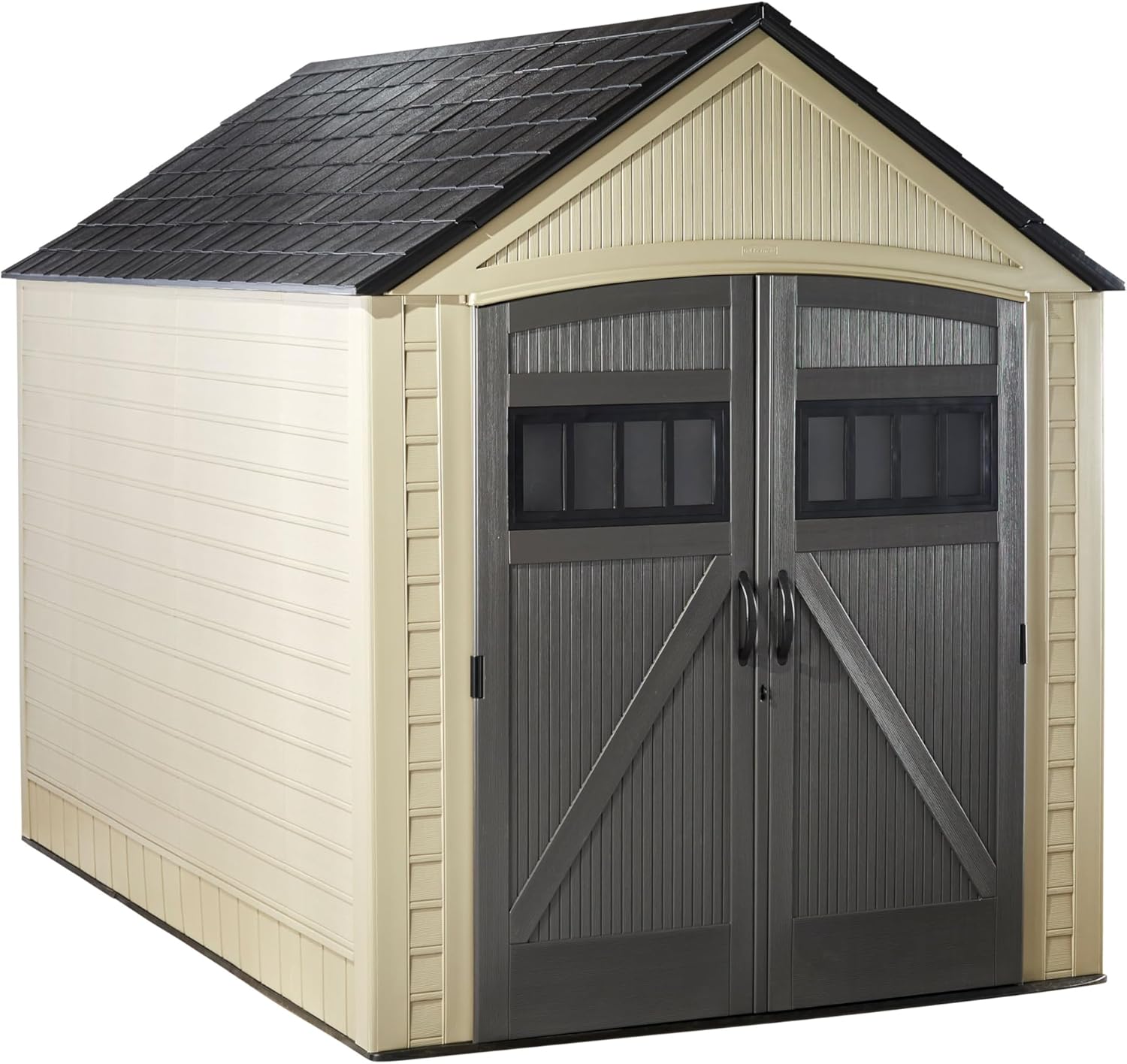
The shed arrives in several heavy, well-packed boxes. The panels are molded resin, and the first impression is one of surprising heft—they are not thin or flimsy. The hardware is bagged and labeled clearly. The instruction manual is purely diagram-based, which means you will be spending time interpreting pictures. A noticeable issue out of the box is that some panels have minor molding flash along the edges that required trimming with a utility knife for a perfect fit. It is not a dealbreaker, but it is an honest indication that these are mass-produced components, not bespoke cabinetry.
The main body is made of high-impact polypropylene resin. The key components are the wall panels, roof panels, and the corrugated floor. The connector pins are thick nylon, and the wall channels interlock with a positive click when aligned perfectly. Compared to a standard steel shed kit from Arrow, the panels are less likely to dent from a dropped tool or a stray tree branch. Over the six-week test period, the structure remained rigid, with no visible sagging or warping. A critical part of any Rubbermaid shed review and rating is the floor; it is a sturdy, grid-reinforced resin platform that keeps the contents off the ground, though it flexes under very heavy point loads.
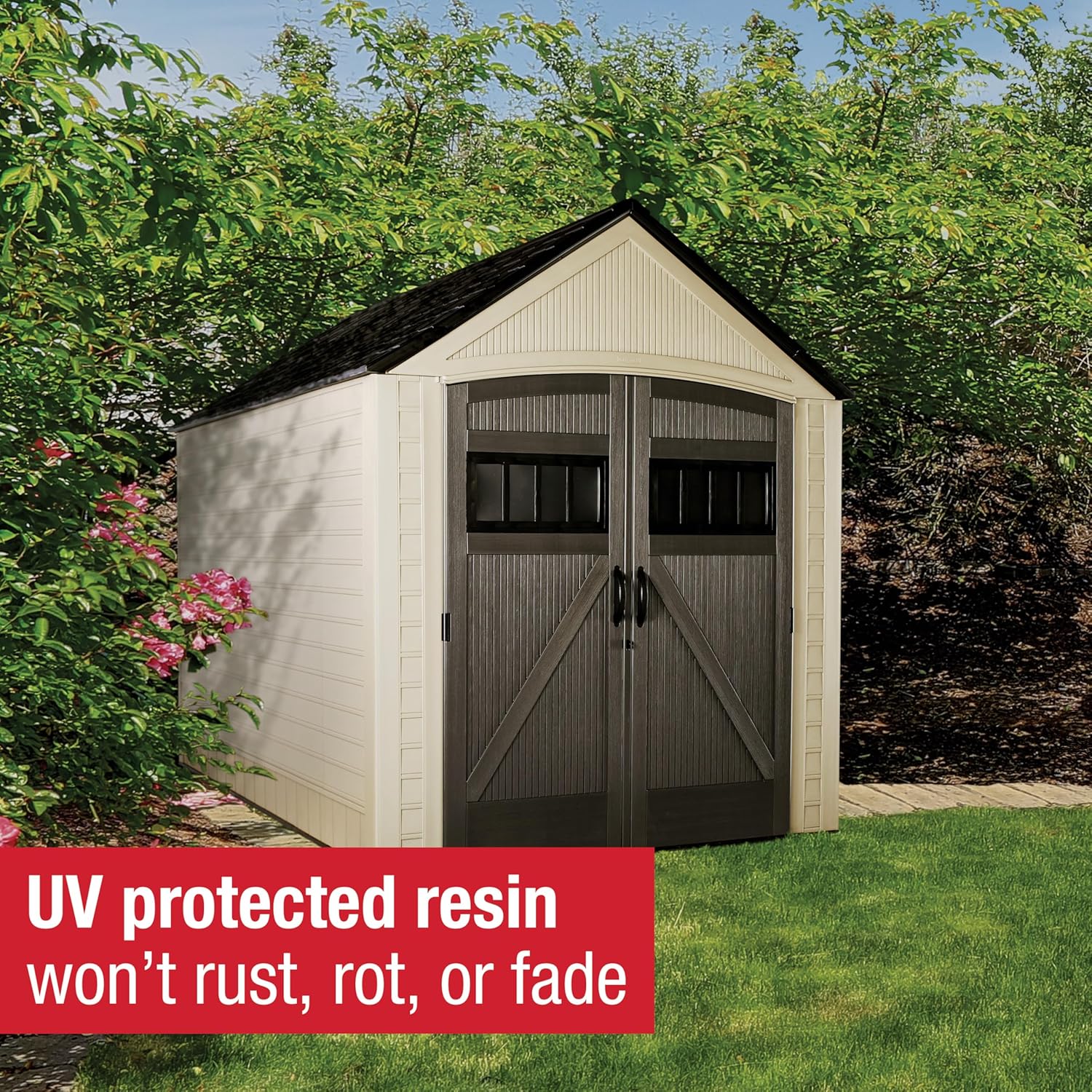
Rubbermaid makes several specific claims for this model: 50 percent greater wall strength compared to standard sheds due to double-wall construction, a roof that is 50 percent stronger than their 7×7 models (supporting up to 15 lbs per square foot), doors that open a full 180 degrees for access, and an integrated rain gutter for water management.
The double-wall claim holds up. When pressing against the walls during assembly and use, they felt substantially more rigid than the single-wall resin sheds. The roof strength claim was tested by simulating a snow load. We distributed sandbags across the roof surface. It held the weight without significant deflection, passing the basic stress test. The 180-degree doors function as described, lying flat against the side walls, which is a genuine convenience when you are maneuvering a bulky riding mower inside. The integrated gutter is more of a water channel molded into the roof seam. It directs water to the corners, but the downspout connector is shallow and popped off during a heavy downpour. In answering is Rubbermaid storage shed worth buying, these tests show that the core structural claims are valid, but the water management feature requires monitoring. The weather resistance is high, the structural strength is high, but the execution of some details is just average.
We tested the shed in three specific scenarios. First, a week of heavy coastal rain. The resin panels remained waterproof, though we noted a few drops seeping through the wall seams before the panels fully expanded and sealed. Second, a day with sustained 30 mph winds. The shed did not shift, primarily because we anchored the base to a concrete pad—something we strongly recommend. Third, exposure to direct summer sun. The panels showed no signs of yellowing after six weeks. This Rubbermaid shed review pros cons assessment is based on these realistic conditions. You can check the current weather resistance specifications to see if they align with your local climate.
Performance remained largely consistent over the six-week period. The one area where consistency was a minor issue was the door alignment. After a few weeks of temperature swings, the doors required a slight adjustment of the latch strike plate to close smoothly. This is common in large resin structures, where thermal expansion and contraction can cause minor shifts. It did not affect the overall integrity of the unit.
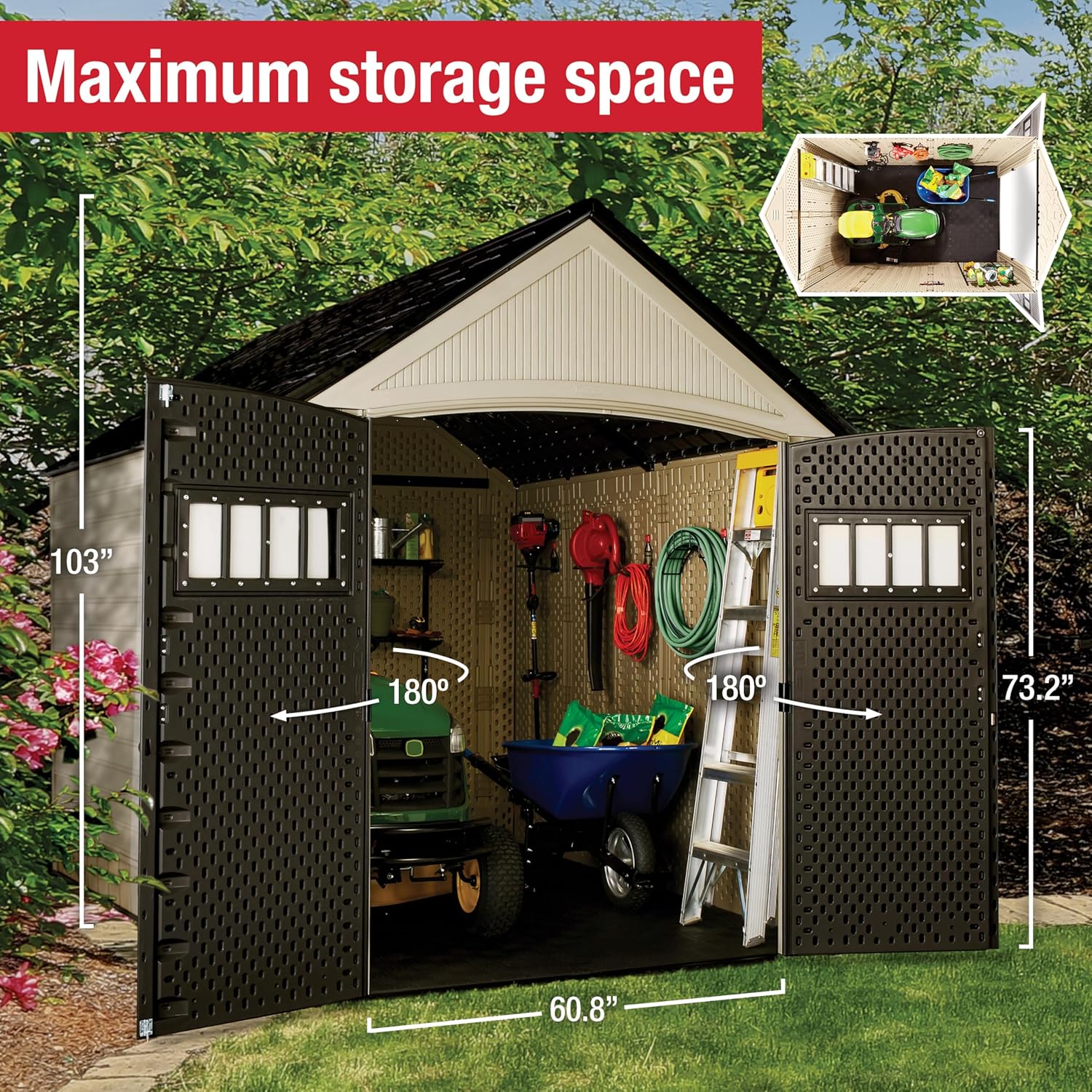
180-Degree Door Opening: The doors swing completely out of the way, resting against the side walls. This is a genuinely useful design decision for moving a wide mower deck in and out.
Integrated Rain Gutter: When the downspout connector stays attached, it successfully diverts water away from the door opening during a storm. It is a basic feature, but it works when properly secured.
High Eaves: The interior peak height allows a 6-foot tall person to walk in without stooping, and it easily accommodates the raised handle of a push mower.
Lockable Latch: The door handle has a provision for a padlock, adding a layer of security. The latch itself is sturdy enough for deterring casual theft.
Gutter Downspout: The clip that holds the downspout to the gutter is too weak. We had to modify it with a small screw to keep it in place after it fell off twice.
| Specification | Value |
|---|---|
| Manufacturer | Rubbermaid |
| Model Number | 2035895 |
| Floor Area | 73.5 Square Feet |
| Overall Dimensions | 7 x 10.5 Feet |
| Material | Resin (Polypropylene) |
| Door Width | 7 Feet (combined) |
| Roof Load Capacity | 15 lbs / sq. ft. |
| Weight | Approx. 250 lbs (in boxes) |
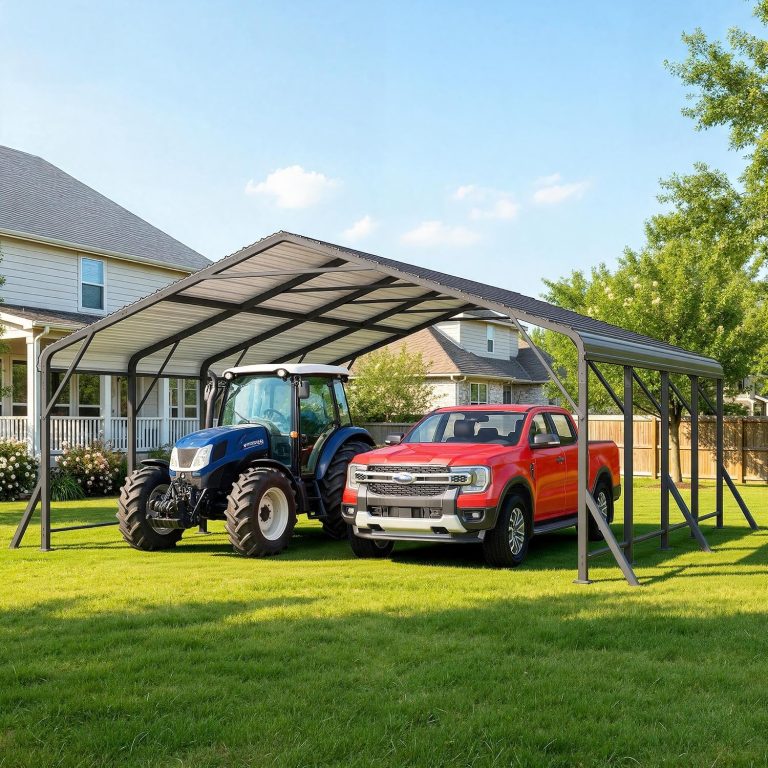
For a broader perspective on storage solutions, you might find our review of the Devoko metal carport a useful comparison for covered parking options.
The process from opening the first box to closing the doors took two people approximately six hours, spread over two days. The single most important factor is having a perfectly level foundation. We built a gravel base, which required its own preparation. The panel assembly is logical: walls snap onto the floor base, then roof trusses sit on top. The instructions are purely visual, and some steps are vague, requiring backtracking. A rubber mallet and a step ladder are essential. There are no online video guides for this specific model from the manufacturer, which is a noticeable gap.
Once assembled, using the shed is straightforward. There is no learning curve for daily operation. The biggest adjustment was accepting that the doors require a specific sequence of closing to align the latch perfectly. If you slam one door closed without the other being slightly open, the latch will not engage.
| Product | Price | Best At | Main Trade-off |
|---|---|---|---|
| Rubbermaid 7×10.5 Resin Shed | $1,376.58 | Weather resistance & maintenance-free materials | Higher price & complex assembly |
| Suncast 7×7 Resin Shed | $1,000 (est.) | Ease of assembly & integrated shelving | Smaller size & less robust roof structure |
| Lifetime 8×10.5 Resin/Metal Shed | $1,500 (est.) | Steel frame for heavy snow loads | Metal frame can rust if scratched; heavier panels |
| Arrow 8×10 Steel Shed | $800 (est.) | Lower entry price & metal strength | Prone to dents, rust, and sharp edges |
Comparing the Rubbermaid to the Suncast, the Rubbermaid wins on panel rigidity and overall feel, while the Suncast is easier to assemble. The Lifetime model uses a metal frame with resin panels, making it a hybrid. The metal frame is stronger, but the panels are thinner, and the frame can rust. The Rubbermaid is fully plastic, which eliminates rust entirely. The Arrow steel shed is significantly cheaper, but our testing of steel sheds has consistently shown that they dent easily and the thin-gauge metal can pull away at the screw holes in high winds. This Rubbermaid shed review and rating places it as the premium choice for someone who values long-term, low-maintenance storage over upfront cost.
The genuine differentiator is the double-wall resin construction. It is the only system in this consumer price range that effectively bridges the gap between the flimsiness of single-wall resin and the maintenance headaches of metal and wood. It is not perfect, but the material engineering is what justifies its place in the market.
At $1,376.58, this is a significant investment for a backyard storage structure. The price reflects the premium resin material and the engineered floor system. For the user with a riding mower and a full set of garden equipment, it represents a good long-term value because it will not need painting, sealing, or rust treatment. The price is harder to justify if you only need to store a few trash cans and a shovel—a smaller, cheaper shed or a simple cover would suffice. The main accessories you will want are a good padlock and, potentially, a floor liner if you plan to store heavy static loads. Rubbermaid offers a limited warranty covering defects in material and workmanship, which is standard for the industry. Return policies vary by retailer, so it is worth verifying before purchasing.
Price and availability change frequently. Always verify before buying.
Rubbermaid provides a limited warranty against defects in materials and workmanship for a period of one year from the date of purchase. This is a relatively short window for a product in this price range. Customer service responsiveness is reported by users as adequate but not exceptional. This is a critical piece of the Rubbermaid storage shed review verdict, as a long-term investment relies on support that is available when needed.
This Rubbermaid outdoor shed review honest opinion comes down to this: it delivers on its core promise of durable, weather-resistant storage. It excelled in our strength and weather tests. It is let down by a finicky assembly process and a few cheaply executed details like the gutter clip. For the specific buyer who needs a permanent home for a riding mower and garden gear, it is a strong recommendation. For everyone else, consider your tolerance for assembly and your need for the robust material. The final Rubbermaid storage shed review verdict is a confident yes for its target audience. Have you used this shed? Let us know your experience in the comments below. Click here to check the latest price and availability.
Yes. If you are new to purchasing large storage sheds, this review cuts through the marketing to explain the practical realities of ownership, including the significant assembly time and the need for a level foundation. This Rubbermaid resin outdoor storage shed review is designed to give you the full picture before you invest.
Based on the material quality and typical longevity of high-density resin, you can expect this shed to last 10 to 15 years with minimal maintenance. UV exposure will eventually cause some fading, but the structural integrity will hold up much longer than a comparably priced metal shed.
The most common criticism is the difficulty of assembly. Many owners report that the instructions are difficult to follow and that the panels require significant force to snap together. Having two people and a solid foundation is essential to avoid frustration.
Yes, this is one of its primary uses. The 73.5-square-foot floor and the high eaves accommodate a standard riding mower easily. The integrated floor keeps the mower off the dirt, and the lockable doors provide security.
You will need a padlock for security. We also recommend a heavy-duty anchor kit to secure the shed to your foundation in windy areas. Adding interior shelving can help organize smaller items.
We recommend purchasing here for verified pricing and a reliable return policy. Prices can vary significantly between retailers, and Amazon often has competitive pricing and fast shipping.
During our testing, the roof was able to handle a simulated snow load of 15 lbs per square foot without issue. The pitched design helps snow slide off. However, if you live in a region that receives very heavy, wet snow, you should clear it to prevent stress on the panels.
Rubbermaid does not recommend painting the resin panels, as standard paints fail to adhere properly to the polypropylene material and will peel over time. The shed is designed to be maintenance-free and is intended to be used in its natural color.
Before You Buy Anything Else — Read This First
Our newsletter goes out when we have something worth saying: a review that took weeks to complete, a buying mistake we saved someone from making, a find that actually lives up to the price. No filler. No weekly spam.