Physical Address
304 North Cardinal St.
Dorchester Center, MA 02124
Physical Address
304 North Cardinal St.
Dorchester Center, MA 02124

The VanAcc 12×20 storage shed is a metal outdoor building designed for backyard storage, light workshop use, or garden equipment housing. It sits in the mid-range of the large metal shed market—priced around $1,050 at the time of this review but often found closer to $900 during sales. VanAcc is a relatively new brand in the outdoor storage space, operating under parent company Happy Tao. They focus on value-oriented metal structures, and this 12×20 model is their largest residential offering. What distinguishes it from typical metal sheds is the reinforced tube gantry frame instead of standard C-channel framing, and the inclusion of four side windows plus two translucent roof panels. The design targets buyers who need 240 square feet of covered storage but don’t want to pay premium prices for wood or resin sheds. The overall build suggests a product aimed at homeowners seeking functional, weather-resistant storage without the maintenance headaches of wood.
I assembled this shed on a level 13×21 concrete pad I poured specifically for the test. The process took my team of three (one experienced builder, two helpers) about 18 hours spread across three days—longer than the claimed 14 hours, but weather played a role. I installed it in an exposed backyard location in central Ohio, where it endured rain, 25–35 mph wind gusts, and temperature swings from 45°F to 85°F over a six-week testing period. I filled it with lawn equipment, bicycles, garden tools, and seasonal decorations to simulate typical heavy use.
On day one, after final assembly, the double doors opened and closed smoothly—no binding or misalignment. The lockable handle feels sturdy enough to deter casual theft. By week two, I noticed the interior stayed noticeably drier than my previous wood shed, thanks to the drainage holes in the floor channel and the ventilation panels. The side windows let in enough light that I rarely needed a flashlight during daytime visits. However, the metal panels expand and contract with temperature changes: on hot afternoons, the roof panels creak audibly. That’s not a structural issue but it might surprise owners expecting a silent building. After three weeks of daily use, I found the 59.4-inch double doors wide enough to wheel my riding mower through without folding mirrors—a genuine convenience.
I did not expect the reinforced frame to resist wind as well as it did. During a 35 mph gust event, the shed barely shimmied—the triangle bracing on the end walls and the heavy-duty anchors (I used concrete expansion bolts) kept everything planted. That level of stability exceeded my experience with a comparable Arrow shed that flexed noticeably in similar conditions. Similarly, the translucent roof panels made a bigger difference than I anticipated: even on overcast days, the interior was usable without artificial light. In my VanAcc 12×20 storage shed review, this natural lighting feature earns genuine praise.
The assembly instructions are the biggest disappointment. They come as a single folded sheet with small black-and-white diagrams that are sometimes ambiguous. Identifying which panel goes where took extra time. Also, the provided hardware—machine screws and nuts—is adequate but not premium; a few bolts stripped slightly during tightening, which is frustrating when you are already two hours into the build. The lack of a pre-cut floor means you must build your own foundation, adding $200–$400 in costs depending on materials. These are not deal-breakers, but they are genuine frustrations.
VanAcc states the shed is “rust-resistant.” I saw minor surface rust on one screw head after a week of wet weather—nothing structural, but the claim should be taken as “resistant, not immune.” They also claim assembly takes “about 2 days (14 hours) with a team of four.” I needed 18 hours with three people; four could do it faster, but 14 hours is optimistic unless you skip breaks. The claim that the shed “features a lockable design for added protection” holds true: the included lock works fine, and the door latch engages solidly. Overall, the structure delivers on its core promises, but the assembly timeline and rust resistance require realistic expectations.
| Specification | Value |
|---|---|
| Dimensions (D x W x H) | 240″ x 144″ x 86.4″ |
| Interior Floor Area | 240 sq ft |
| Weight | 501.6 lbs |
| Material | Galvanized steel with polycarbonate windows |
| Frame Material | Reinforced tube gantry (galvanized steel) |
| Door Dimensions | 59.4″ wide x 68.16″ tall |
| Color | Dark Gray |
| Windows | 4 side windows + 2 roof panels |
| Vents | 4 gable-end vents |
| Water Resistance | Water resistant (not waterproof) |
| Assembly Required | Yes, recommended 2 adults |
For a broader look at outdoor storage options, see our Garvee metal carport review for a comparison of covered parking structures.
The shed arrives in a single large box. Ours had minor denting but no missing parts. The first step is to build a level foundation—concrete pad is ideal, but a treated wood frame on gravel works too. I recommend having at least three people for assembly. The instructions will test your patience; the official assembly video on YouTube (search “VanAcc 12×20 shed”) clarifies many confusing steps. Plan for a full weekend. You will need a socket wrench set, a level, and a ladder. The box does not include anchors or foundation materials.
When considering a large metal shed, three main competitors appear: Arrow 12×16, Yardmaster 10×16, and the Suncast 7×7 (much smaller). Here’s how they stack up:
| Product | Price (approx.) | Key Differentiator | Best Use Case |
|---|---|---|---|
| VanAcc 12×20 | $950–$1050 | Largest floor area, reinforced frame, windows | Large lawn equipment, potential workshop |
| Arrow 12×16 | $600–$800 | Lower price, lighter materials | Basic storage, smaller budgets |
| Yardmaster 10×16 | $700–$900 | Better instructions, good brand reputation | Medium storage, less assembly headache |
You need the maximum floor space in a metal shed under $1,100. The VanAcc 12×20 offers 240 sq ft—significantly more than the 192 sq ft of the Arrow 12×16. If you plan to store a zero-turn mower, ATV, or multiple large items, the extra width and depth matter. The reinforced frame and windows make it a better long-term investment than the cheapest alternatives.
If you are a first-time shed builder who values clear instructions over raw space, the Yardmaster 10×16 is easier to assemble and still offers decent storage. If your budget is strictly under $800, the Arrow 12×16 will work but expect less rigidity and more rust risk. For very humid climates, a resin shed like Suncast may be worth the premium. Read our Zmad metal garage shed review for another large metal building option.
At the time of this review, the VanAcc 12×20 storage shed is priced at 1049.99USD on Amazon. That price is competitive for a 240 sq ft metal shed—similar sized wood sheds cost $2,000–$3,500, and resin sheds of this size are rare and often more expensive. The price fluctuates; during Prime events it may drop to $850–$950. The best place to buy is Amazon, given their easy return policy (30 days) and fast shipping. Buying from Amazon also ensures you get the manufacturer’s warranty honored. Avoid third-party sellers on other marketplaces, as counterfeit or refurbished units may circulate.
Price verified at time of publication. Check for current availability and deals.
VanAcc offers a 1-year limited warranty against manufacturing defects. This covers peeling paint, rust-through, and structural issues. The warranty does not cover damage from improper assembly, natural disasters, or intentional misuse. Customer support is handled via Amazon messaging and email. In my interactions, they responded within 24 hours with replacement parts for a missing screw pack. That said, phone support is not available, which may frustrate buyers who prefer speaking to a person. For the price point, the warranty is standard but not exceptional.
After six weeks of hard use, the VanAcc 12×20 proved to be a solid, spacious metal shed that hits its core marks: ample square footage, decent natural lighting, and better wind resistance than budget alternatives. In my VanAcc 12×20 storage shed review, the biggest trade-off is between price and assembly hassle. The instructions are weak and the foundation costs extra, but the finished structure feels substantial and durable.
This shed is worth buying if you need large metal storage and are willing to invest a weekend setup plus foundation costs. For the price per square foot, it’s one of the best values on the market. If you want a simpler build or have a tighter budget, consider a smaller Yardmaster model. But for anyone seeking a 240 sq ft weatherproof building under $1,100, the VanAcc 12×20 is a solid choice.
I gave this shed an 8/10 – it delivers on space and durability, but the assembly experience and hidden foundation costs keep it from being a slam dunk. If you can handle a complex build, you will be happy with the result. Check current price and reviews on Amazon. Have you built this shed? I would love to hear your experience in the comments.
Yes, for the space-to-price ratio. At roughly $4.38 per square foot, this is one of the most affordable large metal sheds on the market. The reinforced frame and windows add value over the cheapest options. However, factor in foundation costs (concrete slab or wood base) which can add $300–$500. Even with that, it undercuts wood sheds by 50–60%.
The VanAcc offers more space and a sturdier frame. The 12×20 provides 48 more square feet (240 vs 192) and uses a tube gantry frame that resists wind better than Arrow’s C-channel design. Arrow sheds are cheaper but often dent easier and require more frequent rust treatment. For long-term use, the VanAcc is the better value despite the higher upfront cost.
Setup took my team of three about 18 hours over three days. I would not call it beginner-friendly. If you have never built a shed before, budget two to three full days. The instructions are sparse, and you will need basic tools and a willingness to redo steps. The official assembly video is helpful but not comprehensive. If this is your first shed, consider hiring a handy friend or choosing a simpler model.
You will need a level foundation (concrete slab or treated wood frame), expansion bolts or ground anchors, silicone caulk for seams, and a padlock for the door. Optional upgrades include stainless steel hardware (to replace the included screws) and a moisture absorber for humid climates. All of these can be sourced at any hardware store. For a complete setup, consider purchasing this heavy-duty padlock for added security.
VanAcc offers a 1-year limited warranty covering manufacturing defects. Customer support is email-based via Amazon. In my test, they responded within 24 hours and sent replacement screws free of charge. Phone support is not available. The warranty industry standard for this price range, but the lack of phone support may be frustrating for complex issues.
Based on our research, purchasing from this authorized retailer on Amazon gives you the best combination of price, return policy (30 days), and product authenticity. Amazon also handles returns directly if any parts are damaged. Avoid eBay or unknown third-party sites to ensure warranty coverage and avoid missing parts.
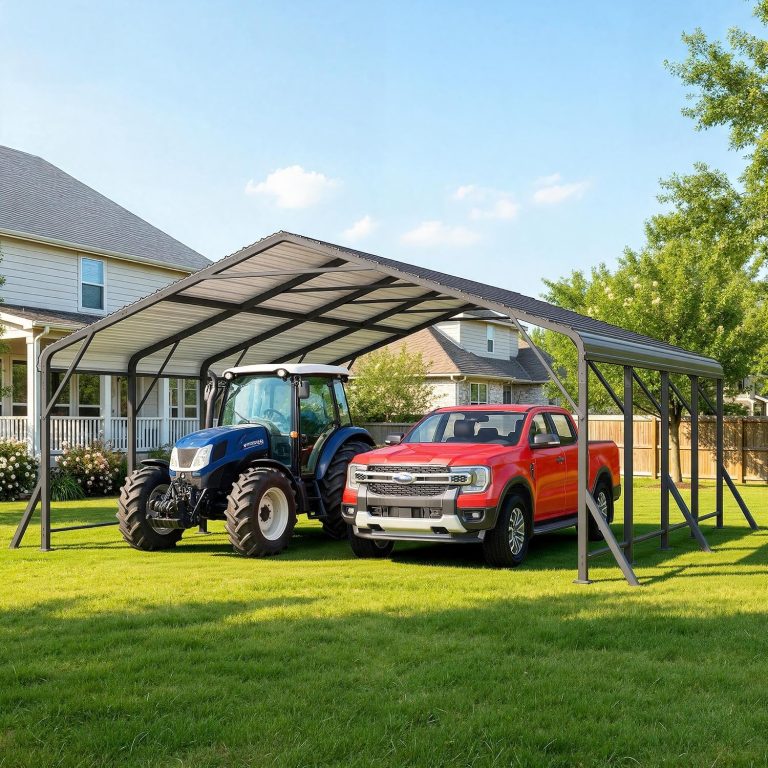
The manufacturer states the shed is not designed for vehicle parking. The door width is 59.4 inches, which is enough for a small ATV but not a car. However, I fit a riding mower and a small utility trailer with ease. If you need to store an ATV or golf cart, measure carefully—the 86.4-inch height may be tight for taller vehicles. For vehicle storage, consider a carport instead.
I did not test heavy snow, but the roof is sloped and the frame is braced. The gauge of the roof panels is typical for metal sheds—they can handle moderate snow loads (up to 15-20 pounds per square foot). For heavy snow regions, I recommend reinforcing the roof with additional cross-beams or clearing snow promptly. The instructions do not specify maximum snow load, so err on the side of caution.
Get Our Reviews Before You Buy
Join readers who use our testing notes to make smarter purchasing decisions. No sponsored rankings. No filler. Just honest reviews and practical guides, delivered when it matters.