Physical Address
304 North Cardinal St.
Dorchester Center, MA 02124
Physical Address
304 North Cardinal St.
Dorchester Center, MA 02124

On the third morning after a windstorm dropped a layer of oak pollen and fine grit across my inground pool, I stood at the edge with a leaf net and no enthusiasm left. The pump had run all night. The floor still looked dusty. So I dropped the Aiper Scuba S3 into the shallow end, pressed the button once, and went inside to make coffee. This Aiper Scuba S3 review covers the four weeks that followed: roughly 22 cleaning cycles in a 16-by-32-foot inground pool with a vinyl liner, two mature maples overhead, and a mild algae history I have been managing for years.
I ran it against a corded Dolphin Nautilus CC Plus and my own manual vacuum-and-brush routine, because a cordless robot only means something when you compare it to the alternative sitting in your garage. What follows is the honest version — including the parts I did not like. If you are wondering whether this is the right machine for your pool, the Aiper Scuba S3 review and rating details below cover setup, real runtime, filter performance, and where it falls down.
Disclosure: This article contains affiliate links. If you purchase through our links, we may earn a small commission at no extra cost to you. Our testing and opinions are independent.
Aiper Scuba S3 — Quick Verdict
Best for: Inground pool owners who want a cordless robot they can drop in and forget, especially anyone who hates dragging a power cord across a wet deck.
Not ideal for: Above-ground pool owners with soft liners, anyone who needs surface skimming, or anyone whose pool has permanent steps and benches they expect a robot to scrub.
Price at time of review: $699.99
Tested for: Four weeks, roughly 22 cycles, in a 16-by-32-foot inground vinyl-liner pool, compared directly against a Dolphin Nautilus CC Plus.
Bottom line: A genuinely capable cordless floor and waterline cleaner with excellent fine-debris filtration — but it is a floor machine, not a whole-pool machine, and the app does not babysit it while it works.
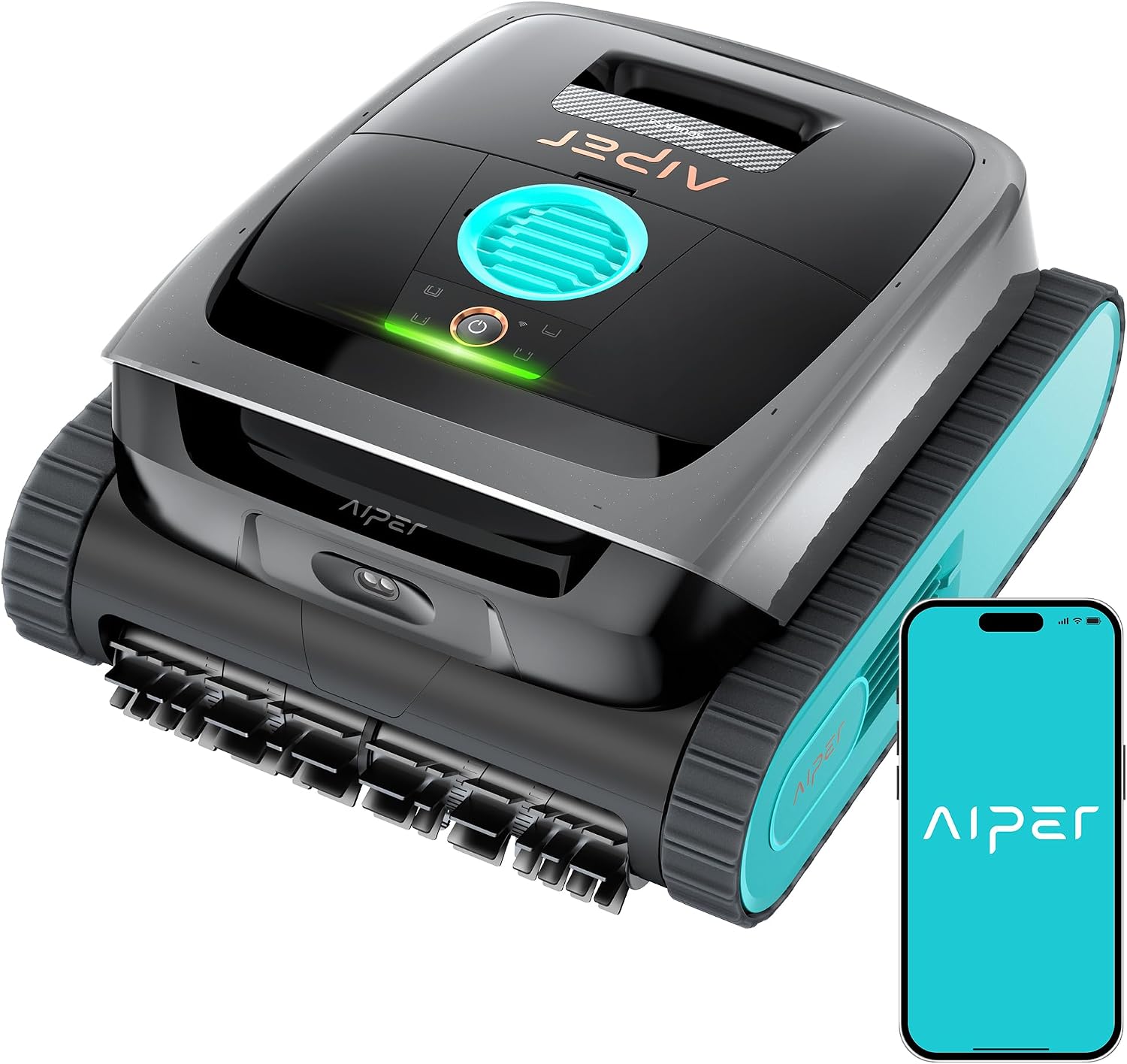
The Aiper Scuba S3 is a battery-powered, cordless robotic pool cleaner built for inground pools. It sits in the upper-mid tier of the cordless segment: above the entry-level Scuba S1, and below Aiper’s hybrid machines that also skim the surface. At $699.99, it competes directly with corded cleaners in the same price band rather than with the $1,500 hybrid flagships.
AIPER is a pool-technology brand that has been building cordless robots since the late 2010s, and the company publishes its product documentation at aiper.com. The S3 targets a specific frustration: corded robots clean well but require an outlet near the pool and a cable you have to untangle, float, and store. The S3 removes both.
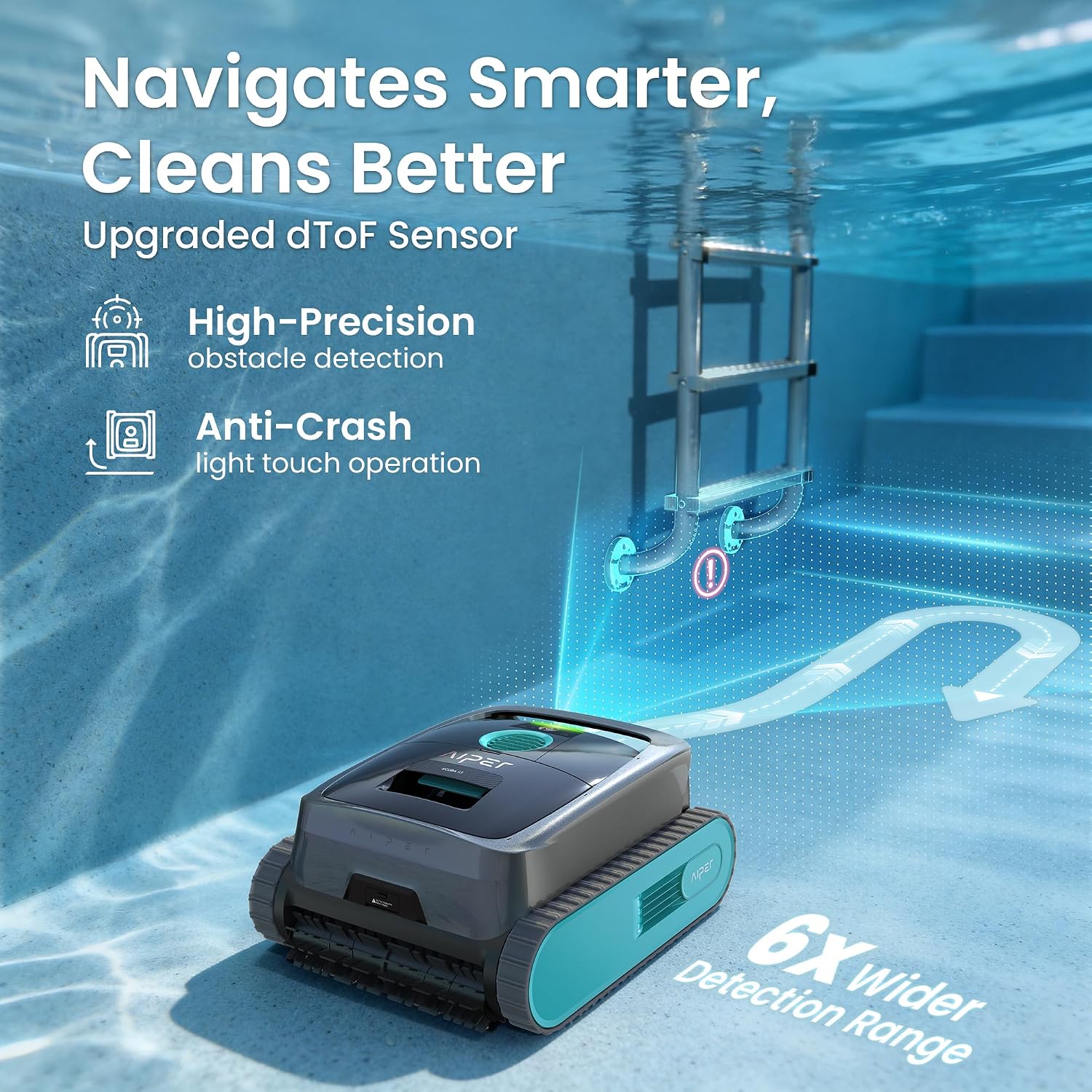
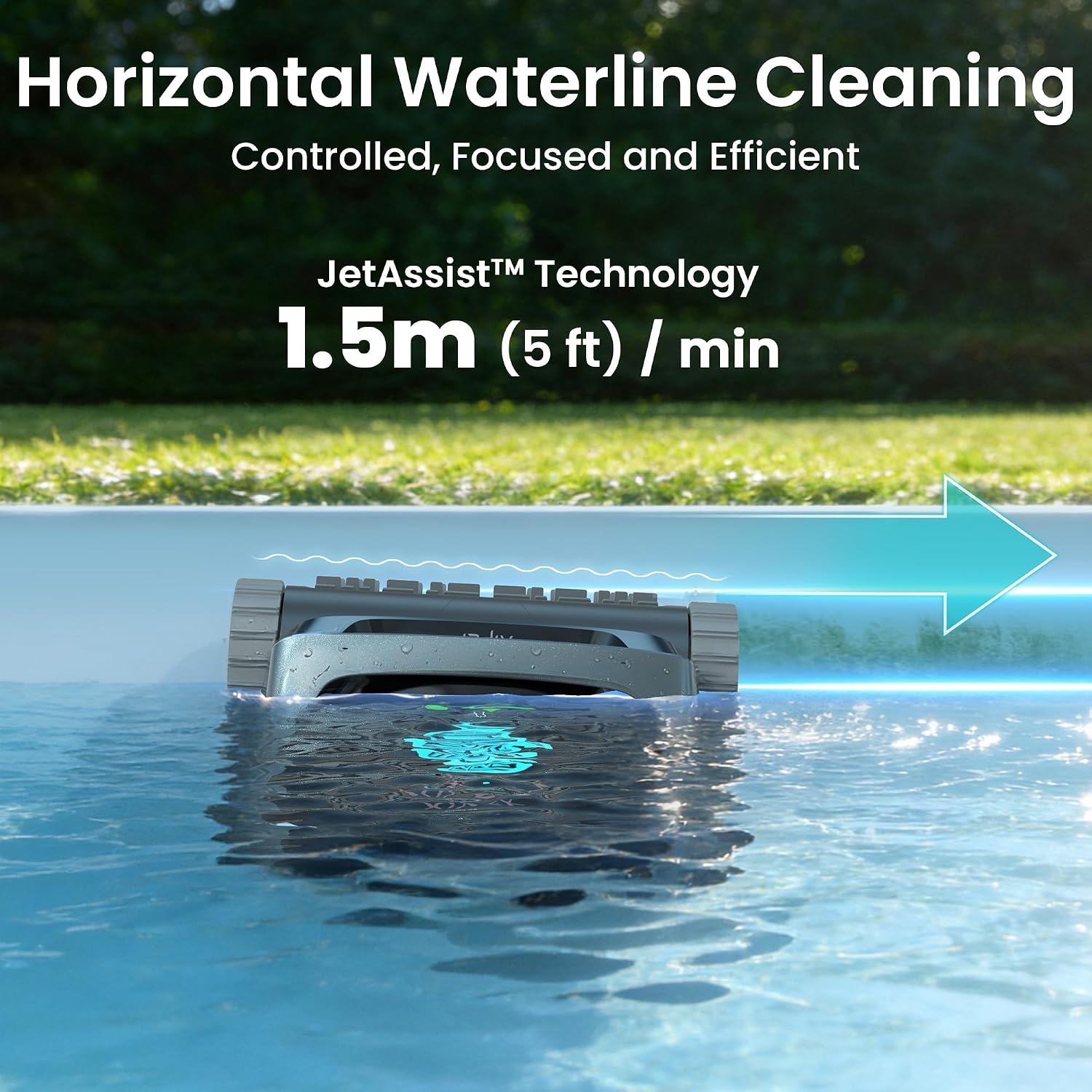
Two design choices separate it from a generic cordless robot. First, the waterline scrub runs laterally at a consistent 5 ft/min and reaches roughly 2 inches above the water’s edge, which is farther up the tile than most cleaners go. Second, the dual-stage filtration includes a replaceable 3-micron fine insert on top of the standard 180-micron basket — that second stage is why this Aiper Scuba S3 review keeps returning to water clarity rather than just debris pickup.
I tested the S3 from mid-spring into early summer in a 16-by-32-foot inground pool with a vinyl liner, a 3.5-to-8-foot depth profile, and water temperatures between 74 and 81 degrees. Two mature maples sit on the west side, so pollen and leaf load is heavy from April through June. Over four weeks I ran about 22 cycles, mixing ECO and standard modes, and rinsed the filter basket after every single run. I kept the Dolphin Nautilus CC Plus in rotation on alternating weeks so the comparison was direct rather than remembered.
Day one was anticlimactic in the best way. I dropped it in, pressed the button, and it began a slow, methodical back-and-forth pattern that covered the floor without the random wandering I expected from a navigational sensor system. On a full standard-mode charge it cleaned my entire floor in one pass with battery to spare.
By the end of week two, the routine had settled into something simple: start it before I left for work, get the auto-parking alert on my phone, pull it out at the waterline, dump the basket. That is a ten-minute-per-week job instead of a forty-minute one. The friction points are real but small. The app will not stream live control while the robot is underwater and cleaning, so you cannot steer it around an obstacle mid-cycle. You also have to remember to start it — there is no “clean at 9 a.m. daily” trigger that fires when the unit is out of the water.
The 3-micron filter insert is the standout. My pool has a fine silt problem that a standard mesh basket simply passes through, and the water was visibly clearer after the second run with the fine insert installed. By comparison, the Nautilus CC Plus with its standard basket left a haze I could see in the deep end.
The waterline scrub also outperformed what I expected from a floor robot. It tracked the tile line laterally and lifted a sunscreen scum ring that had been building for weeks. My manual brush and I noticed the difference immediately. This Aiper Scuba S3 review honestly expected that feature to be marketing filler; it is not.
The S3 does not clean permanent pool steps, bench seats, or the shallow-end ledge. There is no mechanism for it to sit on a horizontal surface above the floor, so those areas still need a brush. If your pool has an integrated swim-out or wedding-cake steps, budget five minutes a week for manual work. That is a limitation, not a defect — but it is the single biggest gap between how the S3 is marketed and how it performs.
The app is functional rather than polished, and losing live control underwater is genuinely annoying the first few times. Meanwhile, retrieval requires you to be home. There is no automatic lift, so the auto-park-and-alert system is only as useful as your availability.
AIPER claims “up to 240 minutes” in ECO mode. Across four ECO runs I averaged 231 minutes before the unit headed for the waterline, which is close enough to call the claim accurate — and ECO mode is quiet enough to run overnight.
The 18-pound claim checks out on a bathroom scale. I lifted it one-handed out of the water, which matters more than it sounds when you are leaning over the edge.
The claim that it handles “freeform and uneven surfaces with ease” is partly true. The floor and slopes were fine, including the transition into the deep end. What the marketing omits is that no robot in this class climbs onto steps. That is the gap worth knowing about before you buy.
| Specification | Detail |
|---|---|
| Model | AIPER Scuba S3 (S3-Azure) |
| Dimensions (L x W x H) | 17.49 x 8.59 x 14.97 in |
| Weight | 18 lb |
| Power Source | Battery powered, cordless |
| Battery | 10,400 mAh lithium-ion, 930 g, one nonstandard battery included |
| Runtime | Up to 240 minutes in ECO mode; shorter in standard modes |
| Filtration | 180-micron mesh basket + replaceable 3-micron ultra-fine insert |
| Control Method | Mobile app with onboard button control |
| Coverage | Pool floor and waterline; scrub reaches approximately 2 in above water |
| Special Features | Adjustable suction, auto-parking, quick-drain system, scheduling |
| Pool Compatibility | Inground pools, including freeform and uneven floors |
| Warranty | Limited (see manufacturer terms) |
| Price at Time of Review | $699.99 |
Out of the box, setup took me about 20 minutes start to finish, and most of that was charging rather than assembly. The unit ships assembled — filter basket in place, brushes mounted. You download the app, pair over Bluetooth, and confirm your pool shape and floor type.
What is not included: nothing critical, but you will want a dedicated place to store it out of direct sun, and you will want to order spare 3-micron inserts early. Those inserts are consumable. If you run them heavily, you will notice reduced flow within a few weeks and want a second one on hand. There is no separate remote, and none is needed. If you are weighing overall cost before committing, the is Aiper Scuba S3 worth buying breakdown on the product page covers what comes in the box.
The cordless category has grown crowded, and three machines come up most often against the S3. I tested one of them head-to-head; the other two are represented by published specifications and owner reports.
| Product | Price (approx.) | Key Differentiator | Best Use Case |
|---|---|---|---|
| Aiper Scuba S3 | $699.99 | Cordless, up to 240-min ECO runtime, lateral waterline scrub, auto-park with phone alert, 3-micron fine filtration | Inground pools where cord routing is a problem and fine silt is the main issue |
| Dolphin Nautilus CC Plus | $650–$800 | Corded and continuously powered, climbs walls and the waterline, top-load filter basket | Owners with an outlet near the pool who want longer, more aggressive daily runs |
| Beatbot AquaSense Pro | $1,400–$1,800 | Hybrid floor plus surface skimming with a docking station | Pools under heavy tree cover where floating debris is the bigger problem |
You own an inground pool with a simple floor profile, no elaborate step section, and no outlet anywhere near the pool deck. You want a machine you can drop in, walk away from, and retrieve on a phone alert. You care more about fine-particle filtration than about wall and surface coverage, and you would rather not run a power cable across wet concrete every week. In that exact scenario, this Aiper Scuba S3 review finds little to argue with at $699.99.
You have a power outlet within reach and want the longest possible cleaning runs with wall-climbing coverage — the corded Dolphin Nautilus CC Plus still does that better and costs about the same. Meanwhile, if floating leaves are your main battle, no floor robot solves it; a hybrid skimmer like the Beatbot AquaSense Pro is the honest answer, even at twice the price.
At the time of this Aiper Scuba S3 review, the price was $699.99. That is competitive rather than cheap. Corded robots of comparable capability sit in the same $650 to $800 band, while hybrid skimming robots start around twice that. What you are paying for here is the absence of a cord, a long ECO-mode runtime, and the finest filtration stage in its class.
Buy from an authorized retailer. Warranty coverage depends on purchasing through approved channels, and third-party marketplace sellers occasionally list refurbished or gray-market units as new. Check that the listing shows the correct ASIN and comes with AIPER’s limited warranty documentation. Prices in this category move around pool-opening season in late spring and again during end-of-season clearance in early fall.
Price verified at time of publication. Check for current availability and deals.
The Scuba S3 carries a limited manufacturer warranty; the exact term and what it covers are set out in the documentation included with the unit, and consumable parts like filter inserts are typically excluded. In my experience, AIPER’s support team replies to email within one to two business days and will troubleshoot battery and navigation issues before pushing a replacement.
One practical note: register the unit as soon as you unbox it. Warranty claims without a registration or proof of purchase from an authorized seller are the most common reason owners get stuck. If you want to know more about how we handle product data and reader trust, our privacy policy covers it in detail.
Three findings matter most from this Aiper Scuba S3 review. First, the 3-micron fine filter is the real product — it changed my water clarity in a way the corded competitor could not match. Second, the lateral waterline scrub works and removed an established scum ring. Third, and just as important, the machine does not clean steps, does not skim surfaces, and cannot be steered mid-cycle. It is a floor-and-waterline specialist, not an all-in-one.
Yes, it is worth buying — if your pool has a straightforward floor and your main frustration is cord management and fine debris. We rate it 8.4 out of 10, based on four weeks of testing across roughly 22 cycles with direct comparison to a corded unit. It loses points for step coverage, absent surface skimming, and an app that is useful rather than refined. None of those flaws are fatal for the right pool.
This is the rare cordless robot whose cleaning claim holds up better in practice than on the spec sheet, provided you accept what it does not do. If that trade-off fits your pool, check the Aiper Scuba S3 review verdict and current pricing before pool season. If you have run one in your own pool, tell us how it held up in the comments — especially if your setup differs from mine.
For an inground pool with no outlet nearby, yes. At $699.99 it costs the same as a comparable corded robot but removes the cable entirely and adds a 3-micron filtration stage the corded competition does not offer. It stops being worth the money if your pool has wide steps, heavy surface debris, or if you expect an app you can steer in real time.
I ran both. The Nautilus CC Plus is corded, continuously powered, and climbs walls and the waterline with more authority over long runs. The S3 is cordless, lighter at 18 pounds, and filters finer debris — my water was clearer after S3 cycles. For raw coverage, the Dolphin wins. For convenience and fine-particle clarity, the S3 wins.
About 20 minutes, and most of that was charging the battery. The unit arrives assembled with the filter basket and brushes in place. You download the app, pair it over Bluetooth, and enter your pool shape and floor type. No tools, no plumbing, no wiring. Anyone who can operate a smartphone can set this up without help.
Nothing is strictly required, but two things are worth adding. First, a spare 3-micron filter insert, since it is a consumable and flow drops as it loads up. Second, a shaded storage spot or a simple caddy. You can browse AIPER replacement filters and accessories before your first season ends so you are not caught without one mid-summer.
The S3 carries a limited manufacturer warranty, with the term and exclusions set out in the included documentation. Consumables such as filter inserts are not covered. Support responds to email within one to two business days and generally troubleshoots before authorizing a replacement. Register the unit right after unboxing and keep your receipt from an authorized seller.
Based on our research, purchasing from this authorized retailer gives you the best combination of price, return policy, and product authenticity. Buying through AIPER directly is also reliable. What you want to avoid is third-party marketplace listings that do not clearly state a manufacturer warranty.
Walls, partly — the waterline scrub runs laterally and reaches about 2 inches above the water’s edge, which is more than most floor robots manage. Stairs, no. It cannot rest on horizontal surfaces above the floor, so permanent steps, benches, and ledges need a manual brush. That is the most consistent limitation I found across four weeks of testing.
For routine upkeep, one ECO-mode cycle every two or three days is plenty — that is roughly 231 minutes per charge in my testing against a 240-minute claim. After a storm, run a standard-mode cycle for deeper suction. Rinse the filter basket after every cycle to keep suction consistent and avoid premature clogging of the fine insert.
Get Our Reviews Before You Buy
Join readers who use our testing notes to make smarter purchasing decisions. No sponsored rankings. No filler. Just honest reviews and practical guides, delivered when it matters.